
| I bent to kiss the lovely Maid, | |
| And found a threefold kiss return’d. |
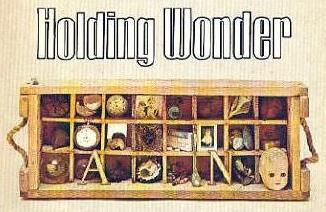
for Anthony Daniels, a critic of Ezra Pound. The illustration may
appeal to Daniels, since it is, like the persona presented by Daniels himself, petit-bourgeois and vulgar.
It was inspired by today's two previous entries and by Daniels's remarks, in this month's New Criterion magazine, on Ezra Pound:
"Of his poetry I shall say
nothing: not being fluent in Greek, Chinese, Italian, Farsi,
and so forth, I do not feel much qualified to comment on it....
I shall merely confess to a petit-bourgeois partiality for
comprehensibility and to what Pound himself called, in the
nearest he ever came to a mea culpa with regard to his own
ferocious anti-Semitism at a time of genocide, 'a vulgar
suburban prejudice' against those who suppose that their
thoughts are so profound that they justify a lifetime of
exegesis if ever their meaning is to be even so much as
glimpsed through a glass darkly."
-- "Pound's Depreciation"
Daniels, here posing as a vulgar suburban petit-bourgeois, is unwilling
to examine Pound's poetry even "through a glass darkly." This
echoes the petit-bourgeois, but not vulgar, "confession" of
today's previous entry:
"I didn't expect much--didn't look out the window
At school more diligent than able--docile stable"
-- "A Life," by Zbigniew Herbert
Pound, editor of T. S. Eliot's "The Waste Land"-- published in the first issue of the original Criterion magazine in 1922-- might refer Daniels to the ghost of Guy Davenport:
"'The architectonics of a narrative,' Davenport says, 'are emphasized
and given a role to play in dramatic effect when novelists become
Cubists; that is, when they see the possibilities of making a
hieroglyph, a coherent symbol, an ideogram of the total work. A symbol
comes into being when an artist sees that it is the only way to get all
the meaning in.'....
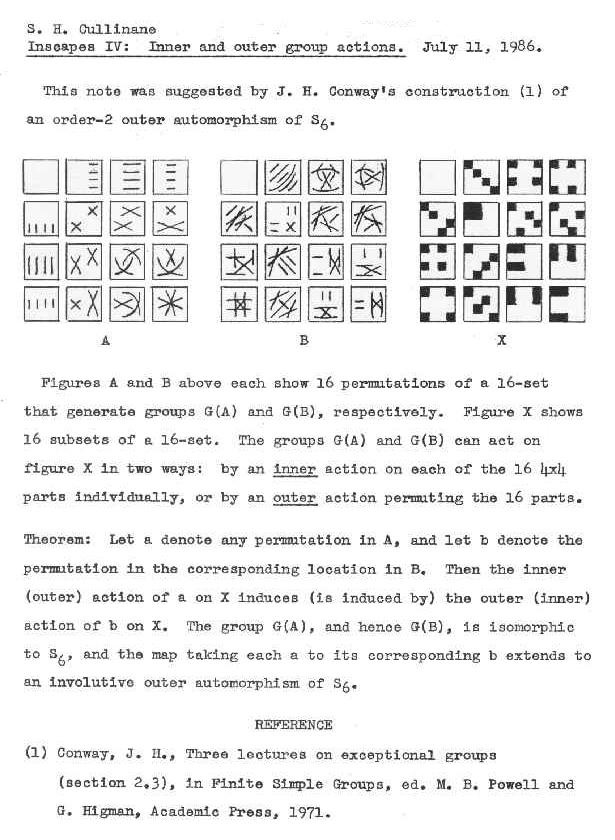
In his study of The Cantos, Davenport defines the Poundian ideogram
as 'a grammar of images, emblems, and symbols, rather than a grammar of
logical sequence.... An idea unifies, dominates, and controls the
particulars that make the ideogram'.... He insists on the
intelligibility of this method: 'The components of an ideogram cohere
as particles in a magnetic field, independent of each other but not of
the pattern in which they figure.'"
-- Andre Furlani, "'When Novelists Become Cubists': The Prose Ideograms of Guy Davenport"
A remark
on form and pattern
by T. S. Eliot
(friend of Pound
and founder of
the original
Criterion magazine)


 )
) )."
)."





Recent Comments