Month: July 2004

  • Keeping Time


    Richard Neuhaus on George Steiner's
    Grammars of Creation
    :


     "... the facts of the world are not and will never be 'the end of the matter.' Music joins grammar in pointing to the possibility, the reality, of more. He thinks Schopenhauer was on to something when he said music will continue after the world ends.


    'The capacity of music to operate simultaneously along horizontal and vertical axes, to proceed simultaneously in opposite directions (as in inverse canons), may well constitute the nearest that men and women can come to absolute freedom.  Music does "keep time" for itself and for us.'"


    "Goin' to Carolina in my mind...."

  • Is Nothing Sacred
    (3/09
    ), continued...


    "With a holy host of others
         standing 'round me
    Still I'm on the dark side
         of the moon
    And it seems like it goes on
         like this forever
    You must forgive me
    If I'm up and gone to
         Carolina in my mind."


    -- James Taylor


    "The town of Mount Pleasant
    is known for its excellent
    public schools, some of the best
    in the Charleston School District
    and in the State."


    -- The Agent-Owned Realty Co.


    Assignments from
    a Mount Pleasant high school
    summer honors course
    ....


    1. READ the first two chapters
      of The Source
      by James Michener.
       (1-111)....


    2. WATCH one of the
      following movies:
      The Agony and the Ecstasy,
      A Man for All Seasons,
      Ben Hur,
      Spartacus,
      or
      The Lion in Winter.


    The Agony
    and the Ecstasy


    and


    a mandorla,
    symbol of the Episcopal
    Diocese of South Carolina,
    from Log24 entries,
    Oct. 4-7, 2002


  • New Web Page:


    The Grid and the Quilt:
    Left Brain, Right Brain,
    The Two Cultures,
    and Mathematics

  • Identity Crisis

    From a summer movie guide:

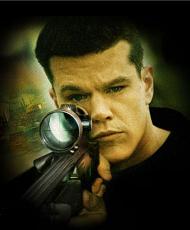
    "Ready for more international espionage and intrigue? On July 23, Matt Damon returns as amnesiac spy Jason Bourne in the sequel to 2002's surprise hit, 'The Bourne Identity.' ....

    At the end of 'Identity,' Bourne promised retaliation to Treadstone (the super-secret agency that created him) if it came after him."


    And now...


    Bad Will Hunting


    The image “http://www.log24.com/log/pix04A/040715-Damon2.jpg” cannot be displayed, because it contains errors.

    The image “http://www.log24.com/log/pix04A/040715-Group.jpg” cannot be displayed, because it contains errors.


    Super-secret?

    You can't make this stuff up.


  • In memory of

    The image “http://www.log24.com/log/pix04A/040715-Hansen.jpg†cannot be displayed, because it contains errors.


    Frances Hansen,

    cruciverbalist extraordinaire:

    The first crossword puzzle --
    The image “http://www.log24.com/log/pix04A/040715-Selim.gif†cannot be displayed, because it contains errors.
    For related commentary on
    telepathic interplay, see an
    entry for Aug. 29, 2002.

    For related material on
    intersecting word patterns
    and telepathic interplay,
    see The Demolished Man,
     by Alfred Bester, and
    We Are The Key,
    a Log24 entry for
    St. Lucia's Day, 2003.
     
    Here is an illustration of what might
    be called, as in the above puzzle, a
     "ten miles pit," from Forbidden Planet,
    a classic film, based on
    Shakespeare's The Tempest,
    discussed in the 8/29/02 entry.

    The image “http://www.log24.com/log/pix04A/040715-Pit2.jpg†cannot be displayed, because it contains errors.

    A quotation that somehow
    seems relevant:

    O the mind, mind has mountains,
         cliffs of fall
    Frightful, sheer, no-man fathomed.
         Hold them cheap
    May who ne'er hung there.

    -- Gerard Manley Hopkins

    Frances Hansen died on Friday, July 9. For more on words and The Roots of Coincidence (the subject of the previous entry), see the entries of July 8-10.

  • Yesterday's first entry contained a picture of the Philadelphia group The Roots:

    The image “http://www.log24.com/log/pix04A/040714-Roots2.jpg” cannot be displayed, because it contains errors.

    Yesterday's last entry, "Welcome to Mr.
    Motley's Neighborhood," dealt with properties of social networks. 
    Trying to learn more about such properties, I just came across this in
    the Wikipedia:
     
    Small World Phenomenon --

    "The Tipping Point by Malcolm Gladwell, based on articles
    originally published in The New Yorker, elaborates the
    'funneling' concept. In it Gladwell argues that the six-degrees
    phenomenon is
    dependent on a few extraordinary people ('connectors') with large
    networks of contacts and friends: these hubs then mediate the
    connections between the vast majority of otherwise weakly-connected
    individuals."

    From USA Today --
     
    Posted 7/12/2004 10:51 PM
    Updated 7/13/2004 4:32 AM

    The Roots tap urgent beat
    in 'Tipping Point'

    "The Tipping Point refers to Malcolm
    Gladwell's book about critical moments that touch off social phenomena,
    and the album certainly conveys a sense of urgency.

    Between the riveting beats and frontman Tariq 'Black Thought' Trotter's
    razor-sharp lyrics about a range of social ills, it's almost impossible
    to turn away." -- Steve Jones

    For more on black thought, click on the picture of Willard Motley's book in the previous entry.

  • Welcome to...
    Mr. Motley's
    Neighborhood

    The image “http://www.log24.com/log/pix04A/040714-Motley2.jpg” cannot be displayed, because it contains errors.

    Will You Be My Friend?

    Only On My Own Turf.

    By Esther Dyson, Editor at Large 


    Special to ZDNet

    July 12, 2004, 3:00 AM PT

    On social-networking Web services:


    "
    Perhaps people will revert to private social networks--ones they
    manage locally....

    Perhaps the law of networks--the strength of a tie degrades
    by the square of the number of links--would become more apparent, and
    perhaps that would be a good thing.

    I'm not sure how good that is as a business model, but it works as a social model."

    The beautiful, brilliant, and charming Esther Dyson seems to have
    suffered a temporary lapse in brilliance with the above remark on the
    strength of ties in social networks....

    "the law of networks--the strength of a tie degrades
    by the square of the number of links...."

    Here are some useful references encountered while fact-checking Ms. Dyson's assertion about the "law of networks" --

    Links on Graph Theory and Network Analysis

    The Navigability of Strong Ties:
    Small Worlds, Tie Strength and Network Topology
    (pdf)

    Modeling Coleman's Friendly Association Networks
    (pdf)

    The Strength of Weak Ties:
    A Network Theory Revisited

    (pdf)

    Scientific Collaboration Networks, II (pdf)
    (Deals specifically with tie-strength computation.) 

    Dynamic Visualization of Social Networks

    and, finally, a diagram of social networks in Shakespeare that
    conclusively demonstrates that there is no simple relationship between
    strength of ties and number of ties:

    Cleopatra's Social Ties
    (png)

    Perhaps what Ms. Dyson had in mind was the following (courtesy of The Motley Fool):

    "Metcalfe's Law of Networks states that the value of a network grows by the square
    of the size of the network. Translated, this means that a network that
    is twice as large as another network will actually be at least four
    times as valuable. Why? Because four times as many interconnections are
    possible between participants in the larger network.

    When you add
    a fourth person to a group of three, you don't add just one more
    networked relationship. You add several. The new individual can network
    with all three of the existing persons, and vice versa. The Internet is
    no different. It became more and more valuable as the numbers of
    computers using it grew."

    For another perspective on this alleged law, from science fiction author Orson Scott Card, see The Group, a Log24 entry of Sept. 24, 2002.

    Elsewhere, in a discussion of social-networking software:

    "Esther Dyson starts with a request that people turn to their left and
    ask the person next to them, 'Will you be my friend?' The room erupts
    in chatter, but, of course, the problem is we don't have enough
    information about one another to make a snap decision about that
    question."

    Obviously, ties resulting from such a request will be weak, rather
    than strong.  However, as study of the above network-theory links
    will reveal, weak ties can sometimes be more useful than strong
    ties.  An example:

    Passing the Peace at Mass.

    Compare and contrast with
    Ms. Dyson's request to turn and
    ask the Mr. Rogers question,
    "Will you be my friend?"

    The best response to this question
    that I know of was contained in
    a good-bye letter from a girl named

    Lucero
    in Cuernavaca
    in the early 1960's:

    "Si me deveras quieres,
    deja me en paz
    ."

    (See Shining Forth.)