Month: November 2003

  • Aes Triplex


    The title, from a Robert Louis Stevenson essay, means "triple brass" (or triple bronze):


    From the admirable site of J. Nathan Matias:


    "Aes Triplex means Triple Bronze, from a line in Horace's Odes that reads 'Oak and triple bronze encompassed the breast of him who first entrusted his frail craft to the wild sea.' ''


    From Philip K. Dick's The Man in the High Castle:


    Juliana said, "Oracle, why did you write The Grasshopper Lies Heavy? What are we supposed to learn?"


    "You have a disconcertingly superstitious way of phrasing your question," Hawthorne said. But he had squatted down to witness the coin throwing. "Go ahead," he said; he handed her three Chinese brass coins with holes in the center. "I generally use these." 


    This passage, included in my earlier entry of Friday, combined with the opening of yet another major motion picture starring Russell Crowe, suggests three readings for that young man, who is perhaps the true successor to Marlon Brando.


    Oracle, for Crowe as John Nash (A Beautiful Mind):


    Understanding the I Ching


    Mutiny, for Crowe as Jack Aubrey (Master and Commander):


    Bartleby, the Scrivener


    Storm, for Crowe as Maximus (Gladiator):


    Pharsalia, Book V:
    The Oracle, the Mutiny, the Storm


    As background listening, one possibility is Sinatra's classic "Three Coins":


    "Three hearts in the fountain,
    Each heart longing for its home.
    There they lie in the fountain
    Somewhere in the heart of Rome.*


    Personally, though, I prefer, as a tribute to author Joan Didion (who also wrote of coins and the Book of Transformations), the even more classic Sinatra ballad


    "Angel Eyes."


     * Horace leads to "Acroceraunian shoals," which leads to Palaeste, which leads to Pharsalia and to the heart of Rome.  (With a nod to my high school Latin teacher, the late great John Stachowiak.)

  • Philip K. Dick Meets Joan Didion


    From the ending of
    The Man in the High Castle:


    Juliana said, "I wonder why the oracle would write a novel. Did you ever think of asking it that?" ....


    "You may say the question aloud," Hawthorne said. "We have no secrets here."


    Juliana said, "Oracle, why did you write The Grasshopper Lies Heavy? What are we supposed to learn?"


    "You have a disconcertingly superstitious way of phrasing your question," Hawthorne said. But he had squatted down to witness the coin throwing. "Go ahead," he said; he handed her three Chinese brass coins with holes in the center. "I generally use these." 


    She began throwing the coins; she felt calm and very much herself. Hawthorne wrote down her lines for her. When she had thrown the coins six times, he gazed down and said:


    "Sun at the top. Tui at the bottom. Empty in the center."


    "Do you know what hexagram that is?" she said. "Without using the chart?"


    "Yes," Hawthorne said.


    "It's Chung Fu," Juliana said. "Inner Truth. I know without using the chart, too. And I know what it means."


    From the ending of
    Play It As It Lays:


    I lie here in the sunlight, watch the hummingbird.  This morning I threw the coins in the swimming pool, and they gleamed and turned in the water in such a way that I was almost moved to read them.  I refrained.


    One thing in my defense, not that it matters.  I know something Carter never knew, or Helene, or maybe you.  I know what "nothing" means, and keep on playing.


    Why, BZ would say.


    Why not, I say.

  • The Tables of Time

    Implied by previous two entries:

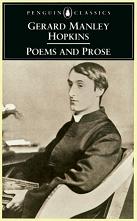
    "This Jack, joke, poor potsherd, patch, matchwood, immortal diamond,

                    Is immortal diamond."
     

    -- Gerard Manley Hopkins,

    "That Nature is a Heraclitean Fire

    and of the Comfort of the Resurrection"

    New York Times, Nov. 13, 2003:

    Peace Rune
    Hexagram 11,
    Jan. 6, 1989

    Picnic Symbol 

    Picnic site symbol,
    British Sea Scouts

    See, too, Art Wars and Time Fold.

  • Change and Permanence:
    A Philosophical Quartet


    Heraclitus


    Hopkins


    H. Wilhelm


    Paul B. Yale


  • Dream of the Unified Field


    Quartet:


    Shanavasa, Ananda,
    Jorie Graham, Robert Louis Stevenson 


    "Shanavasa asked Ananda,


    'What is the fundamental uncreated essence of all things?' "


    -- Jorie Graham,
        "Relativity: A Quartet"
        in The Dream of the Unified Field:
        Selected Poems 1974-1994
    ,
        Ecco Press, 1995


    "Ananda to Shanavasa:
     'Buddha is Alive! Buddha is Alive!'

     Shanavasa to Upagupta:
     'Space is Consumed by Flaming Space.' "


     -- Table of Contents, Living Buddha Zen


    Cover illustration
    by Stephen Savage,
    NY Times Book Review,
    Feb. 2 (Candlemas), 2003


    "We live the time that a match flickers."


    -- Robert Louis Stevenson, Aes Triplex


    Robert Louis Stevenson was born in Edinburgh on this date in 1850.

  • The Silver Table


    "And suddenly all was changed.  I saw a great assembly of gigantic forms all motionless, all in deepest silence, standing forever about a little silver table and looking upon it.  And on the table there were little figures like chessmen who went to and fro doing this and that.  And I knew that each chessman was the idolum or puppet representative of some one of the great presences that stood by.  And the acts and motions of each chessman were a moving portrait, a mimicry or pantomine, which delineated the inmost nature of his giant master.  And these chessmen are men and women as they appear to themselves and to one another in this world.  And the silver table is Time.  And those who stand and watch are the immortal souls of those same men and women.  Then vertigo and terror seized me and, clutching at my Teacher, I said, 'Is that the truth?....' "


    -- C.S. Lewis, The Great Divorce, final chapter


    Follow-up to the previous four entries:


    St. Art Carney, whom we may imagine to be a passenger on the heavenly bus in The Great Divorce, died on Sunday, Nov. 9, 2003.


    The entry for that date (Weyl's birthday) asks for the order of the automorphism group of a 4x4 array.  For a generalization to an 8x8 array -- i.e., a chessboard -- see


    Geometry of the I Ching.


    Audrey Meadows, said to have been the youngest daughter of her family, was born in Wuchang, China. 


    Tui: The Youngest Daughter

    "Tui means to 'give joy.'  Tui leads the common folk and with joy they forget their toil and even their fear of death. She is sometimes also called a sorceress because of her association with the gathering yin energy of approaching winter.  She is a symbol of the West and autumn, the place and time of death."


    -- Paraphrase of Book III, Commentaries of Wilhelm/Baynes.

  • Divine Comedy


    Michael Joseph Gross:


    "The Great Divorce is C.S. Lewis's Divine Comedy: the narrator bears strong resemblance to Lewis (by way of Dante); his Virgil is the fantasy writer George MacDonald; and upon boarding a bus in a nondescript neighborhood, the narrator is taken to Heaven...."


  • 11:11


    "Why do we remember the past
    but not the future?"


    -- Stephen Hawking,
    A Brief History of Time,
    Ch. 9, "The Arrow of Time"


    For another look at
    the arrow of time, see


    Time Fold.


    Imaginary Time: The Concept


    The flow of imaginary time is at right angles to that of ordinary time."Imaginary time is a relatively simple concept that is rather difficult to visualize or conceptualize. In essence, it is another direction of time moving at right angles to ordinary time. In the image at right, the light gray lines represent ordinary time flowing from left to right - past to future. The dark gray lines depict imaginary time, moving at right angles to ordinary time."


    Is Time Quantized?


    Yes.


    Maybe.


    We don't really know.


    Let us suppose, for the sake of argument, that time is in fact quantized and two-dimensional.  Then the following picture,


    from Time Fold, of "four quartets" time, of use in the study of poetry and myth, might, in fact, be of use also in theoretical physics.


    In this event, last Sunday's entry, on the symmetry group of a generic 4x4 array, might also have some physical significance.


    At any rate, the Hawking quotation above suggests the following remarks from T. S. Eliot's own brief history of time, Four Quartets:


    "It seems, as one becomes older,
    That the past has another pattern,
        and ceases to be a mere sequence....


    I sometimes wonder if that is
        what Krishna meant—
    Among other things—or one way
        of putting the same thing:
    That the future is a faded song,
        a Royal Rose or a lavender spray
    Of wistful regret for those who are
        not yet here to regret,
    Pressed between yellow leaves
        of a book that has never been opened.
    And the way up is the way down,
        the way forward is the way back."


    Related reading:


    The Wisdom of Old Age and


    Poetry, Language, Thought.

  • For Hermann Weyl's Birthday:


    A Structure-Endowed Entity


    "A guiding principle in modern mathematics is this lesson: Whenever you have to do with a structure-endowed entity S, try to determine its group of automorphisms, the group of those element-wise transformations which leave all structural relations undisturbed. You can expect to gain a deep insight into the constitution of S in this way."


    -- Hermann Weyl in Symmetry


    Exercise:  Apply Weyl's lesson to the following "structure-endowed entity."


    4x4 array of dots


    What is the order of the resulting group of automorphisms? (The answer will, of course, depend on which aspects of the array's structure you choose to examine.  It could be in the hundreds, or in the hundreds of thousands.)