RAIDERS

OF THE LOST
DINGBAT

OF THE LOST
DINGBAT
My personal favorite:
Dingbat 275A,
"heavy vertical bar"--

Cf. March 7, 2003.
My personal favorite:
Dingbat 275A,
"heavy vertical bar"--
Cf. March 7, 2003.

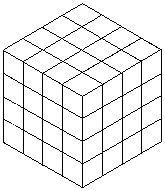
The Sept. 8 entry on non-Euclidean* blocks ended with the phrase "Go figure." This suggested a MAGMA calculation that demonstrates how Klein's simple group of order 168 (cf. Jeremy Gray in The Eightfold Way) can be visualized as generated by reflections in a finite geometry.
* i.e., other than Euclidean. The phrase "non-Euclidean" is usually applied to only some of the geometries that are not Euclidean. The geometry illustrated by the blocks in question is not Euclidean, but is also, in the jargon used by most mathematicians, not "non-Euclidean."

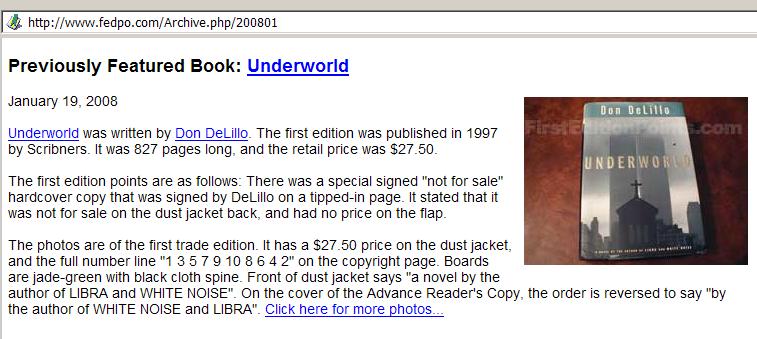
Cover of Underworld,
by Don DeLillo, First Edition,
Advance Reader's Copy, 1997
"Time and chance
happeneth to them all."
-- Ecclesiastes 9:11
Related material:
1. The previous entry, on
Copenhagen physicist
Aage Bohr, and
2. Notes from this journal
from Bohr's birthday,
June 19th, through
Midsummer Night, 2007...
including notes on
Faust in Copenhagen
3. Walpurgisnacht 2008 and
Walpurgisnacht 2009
Abstract:
"Quantum mechanics, which has no completely accepted interpretation but many seemingly strange physical results, has been interpreted in a number of bizarre and fascinating ways over the years. The two interpretations examined in this paper, [Aage] Bohr and [Ole] Ulfbeck's 'Genuine Fortuitousness' and Stuckey, Silberstein, and Cifone's 'Relational Blockworld,' seem to be two such strange interpretations; Genuine Fortuitousness posits that causality is not fundamental to the universe, and Relational Blockworld suggests that time does not act as we perceive it to act. In this paper, I analyze these two interpretations...."
-- "Genuine Fortuitousness, Relational Blockworld, Realism, and Time" (pdf), by Daniel J. Peterson, Honors Thesis, Swarthmore College, December 13, 2007

|
Non-Euclidean
Blocks Passages from a classic story:
... he took from his pocket a gadget he had found in the box, and began to unfold it. The result resembled a tesseract, strung with beads....  Tesseract "Your mind has been conditioned to Euclid," Holloway said. "So this-- thing-- bores us, and seems pointless. But a child knows nothing of Euclid. A different sort of geometry from ours wouldn't impress him as being illogical. He believes what he sees." "Are you trying to tell me that this gadget's got a fourth dimensional extension?" Paradine demanded. "Hardening of the thought-arteries," Jane interjected. Paradine was not convinced. "Then a baby could work calculus better than Einstein? No, I don't mean that. I can see your point, more or less clearly. Only--" "Well, look. Let's suppose there are two kinds of geometry-- we'll limit it, for the sake of the example. Our kind, Euclidean, and another, which we'll call x. X hasn't much relationship to Euclid. It's based on different theorems. Two and two needn't equal four in it; they could equal y, or they might not even equal. A baby's mind is not yet conditioned, except by certain questionable factors of heredity and environment. Start the infant on Euclid--" "Poor kid," Jane said. Holloway shot her a quick glance. "The basis of Euclid. Alphabet blocks. Math, geometry, algebra-- they come much later. We're familiar with that development. On the other hand, start the baby with the basic principles of our x logic--" "Blocks? What kind?" Holloway looked at the abacus. "It wouldn't make much sense to us. But we've been conditioned to Euclid." -- "Mimsy Were the Borogoves," Lewis Padgett, 1943 |
For the intuitive basis of one type of non-Euclidean* geometry-- finite geometry over the two-element Galois field-- see the work of...
Friedrich Froebel
(1782-1852), who
invented kindergarten.
His "third gift" --

 © 2005 The Institute for Figuring
-- A passage from Lewis Carroll's Through the Looking-Glass. The "garden" part-- but not the "ideas" part-- was quoted by Jacques Derrida in Dissemination in the epigraph to Chapter 7, "The Time before First."
Part II: "Mimsy Were the Borogoves," a classic science fiction story:
"... he lifted a square, transparent crystal block, small enough to cup in his palm-- much too small to contain the maze of apparatus within it. In a moment Scott had solved that problem. The crystal was a sort of magnifying glass, vastly enlarging the things inside the block. Strange things they were, too. Miniature people, for example-- They moved. Like clockwork automatons, though much more smoothly. It was rather like watching a play."
Part III: A Crystal Block --
(continued from
February 25th, 2007)
"From wrong to wrong the exasperated spirit
Proceeds, unless restored by that refining fire
Where you must move in measure, like a dancer."
-- Four Quartets

(Cover slightly changed.)
Background --
SAT
Part I:
Part II:
 |
Part III:
From August 25th --

"Boo, boo, boo,
square root of two."
Continued from Monday
"This is a chapel
of mischance;
ill luck betide it, 'tis
the cursedest kirk
that ever I came in!"
Philip Kennicott on
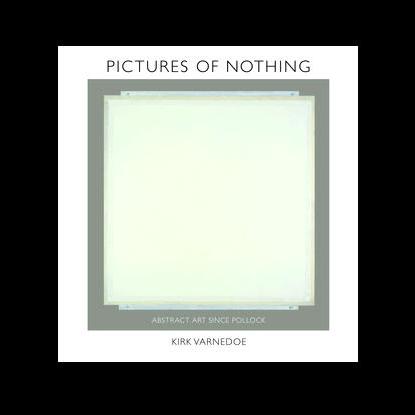
Kirk Varnedoe in
The Washington Post:
"Varnedoe's lectures were
ultimately about faith,
about his faith in
the power of abstraction,
and abstraction as a kind of
anti-religious faith in itself...."
Kennicott's remarks were
on Sunday, May 18, 2003.
They were subtitled
"Closing the Circle
on Abstract Art."
Also on Sunday, May 18, 2003:
"Will the circle be unbroken?
As if some southern congregation
is praying we will come to understand."
Princeton University Press:
See also
Parmiggiani's
Giordano Bruno --

Dürer's Melencolia I --

and Log24 entries
of May 19-22, 2009,
ending with
"Steiner System" --

George Steiner on chess
(see yesterday morning):
"Allegoric associations of death with chess are perennial...."
Yes, they are.
April is Math Awareness Month.
This year's theme is "mathematics and art."

Cf. both of yesterday's entries.






Recent Comments