Month: July 2008

  • Serious Numbers, continued:

    AND MORE LOGOS:

    "Serious numbers will
    always be heard."
    -- Paul Simon  

    http://www.log24.com/log/pix08/080711-DowLg.jpg

    http://www.log24.com/log/pix08/080711-NYSE.jpg

    http://www.log24.com/log/pix08/080711-HSBClogo.jpg

    The HSBC Logo Designer --

    Henry Steiner

    He
    is an internationally recognized corporate identity consultant. Based
    in Hong Kong, his work for clients such as HongkongBank, IBM and
    Unilever is a major influence in Pacific Rim design.

    Born in Austria and raised in New York, Steiner was educated
    at Yale under Paul Rand and attended the Sorbonne as a Fulbright
    Fellow. He is a past President of Alliance Graphique Internationale.
    Other professional affiliations include the American Institute of
    Graphic Arts, Chartered Society of Designers, Design Austria, and the
    New York Art Directors' Club.

    His Cross-Cultural Design: Communicating in the Global
    Marketplace
    was published by Thames and Hudson (1995).

    -- Yaneff.com

    Related material

    from the past
    --

    Wittgenstein and Fly from Fly-Bottle

    Fly from Fly Bottle:

    Graphic structures from Diamond Theory and from Kyocera logo

    Charles Taylor,
    "Epiphanies of Modernism,"
    Chapter 24 of Sources of the Self
      (Cambridge U. Press, 1989, p. 477) --

    "... the object sets up
     a kind of frame or
    space or field

       within which there can be epiphany."

    Related material
    from today --

    Escape from a
      cartoon graveyard:

    http://www.log24.com/log/pix08/080711-BabyBlues.jpg

  • Annals of Philosophy:

    LOGOS

    "Religions are hardy."
    -- TIME magazine,
    issue dated July 14

    "I confess I do not
    believe in time."
    -- Vladimir Nabokov  

    "I can hardly do better than
    go back to the Greeks."
    -- G. H. Hardy

    'The Greeks and the Irrational,' by E.R. Dodds

    Figure 1:
    The Greeks

    Diagonal of the Square

    Figure 2:
    The Irrational

    'You cannot find the limits of the soul even by travelling all roads-- so deep is its logos'-- Heraclitus

  • His and Hers:

    Something

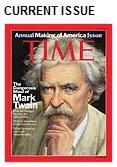
    From the current
    issue of TIME:

    Mark Twain on cover of  TIME, issue dated July 14, 2008

    "Religions are hardy. 'Many a time
    we have gotten all ready for the
    funeral' of one faith or another,
    'and found it postponed again,
    on account of
    the weather or something.'"

    -- Mark Twain

    Twain was raised
    as a Presbyterian
    (the Calvinist tradition).

    This year's Twain award
    for humor went to
    George Carlin,
    raised in
    the Catholic tradition.

    On learning he had won
    the Twain award,
    Carlin said,
    "Thank you, Mr. Twain.
    Have your people
    call my people."

    Today's Birthdays:

    Born July 10, 1509 --

    John Calvin portrait


    John Calvin

    His people: see

    The Authority of Narrative.

    Born July 10, 1984 --

    Maria Julia Mantilla website screenshot

    Maria Julia Mantilla

    Her people: see 

    Catholic Tastes.

  • Translation, continued:

    Ah! Bright Wings

    A poem by the late Thomas Disch:

    Sundays at the Colosseum

    I think you always had to be a little juiced
    to enjoy the show. Or Jewish!
        I never attended
    without a flask of red, and would salute
    the dying singers--
        martyrs they called themselves--
    when the lions drew first blood.
        The songs
    went on until either terror or death
    had silenced the last of them. I doubt
    we would have gone so religiously
    if it weren't for the singing.
    Sometimes we'd even sing along.
    Circuses aren't the same these days.
        Pity.

    -- From Disch's weblog on Friday,
       May 23, 2008, at 8:26 AM

    Related material on a novel by Disch:

    "On Wings of Song, published in 1979, tells the story of a repressive
    Amesville, Iowa, in the 21st century. The main character, Daniel
    Weinreb, tries to master the art of song and flight, 'driven by the
    knowledge that some have attained flight, their spirits separated from
    their physical bodies and propelled on the waves of their own singing
    voices-- literally born on wings of song.'"

    -- Jocelyn Y. Stewart in a Los Angeles Times obituary of July 8, 2008

    See also the Log24 entries for
     the date of Disch's poem--
     St. Sarah's Eve-- and for
     the evening of July 8.

  • Review:

    God, Time, Epiphany

    8:28:32 AM

    Anthony Hopkins, from
    All Hallows' Eve
    last year
    :

    "For me time is God,
    God is time. It's an equation,
    like an Einstein equation."

    James Joyce, from

    June 26 (the day after
    Anti-Christmas) this year
    :

    "... he glanced up at the clock
    of the Ballast Office and smiled:
    -- It has not epiphanised yet,
    he said."

    Ezra Pound (from a page
    linked to yesterday morning):

    "It seems quite natural to me
    that an
    artist should have
    just as much pleasure in an
    arrangement of planes
    or in a pattern of
    figures,
      as in painting portraits...."

    From Epiphany 2008:

    An arrangement of planes:

    http://www.log24.com/log/pix08/080709-Epiphany.gif

    From May 10, 2008:

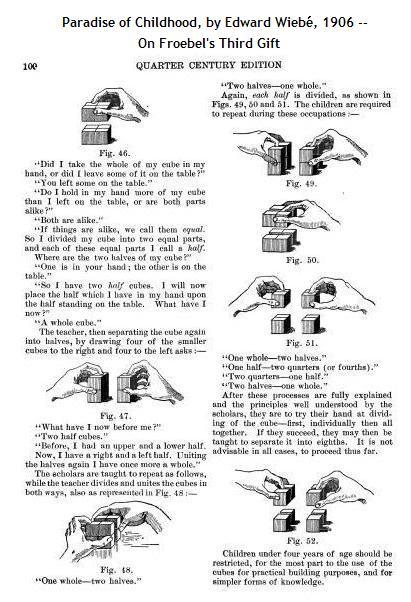
    A pattern of figures:


    Seven partitions of the 2x2x2 cube in a book from 1906

    See also Richard Wilhelm on
    Hexagram 32 of the I Ching:


    "Duration
    is a state whose movement is not worn down by hindrances. It is not a
    state of rest, for mere standstill is regression. Duration is rather
    the self-contained and therefore self-renewing movement of an
    organized, firmly integrated whole, taking place in accordance with
    immutable laws and beginning anew at every ending. The end is reached
    by an inward movement, by inhalation, systole, contraction, and this
    movement turns into a new beginning, in which the movement is directed
    outward, in exhalation, diastole, expansion."

    'The Middle-English Harrowing of Hell,' by Hulme, 1907, page 64, line 672: 'with this he gaf the gaste'

    -- The Middle-English
        Harrowing of Hell...

        by Hulme, 1907, page 64

  • The Final Hit:

    Translation
    to a Higher Plane

    New York State Lottery
    this evening: 737.

    Boeing 737 in flight

    "Don't know when 
      I'll be back again."

    -- Peter, Paul, and Mary --
    the final hit

  • Final Arrangements, continued:

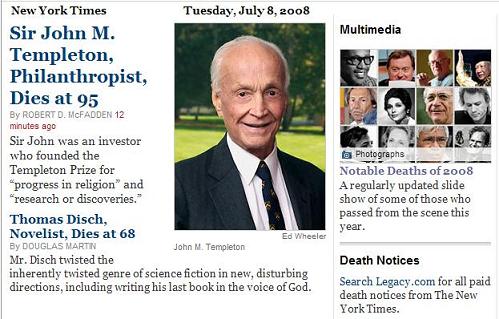
    And the Templeton Prize
      goes to...

    Sir John M. Templeton and Thomas Disch in the New York Times obituaries on Tuesday, July 8, 2008

    Click on image for further details.

  • The Holy Spook continued:

    New York Lottery mid-day today: 672

    'The Middle-English Harrowing of Hell,' by Hulme, 1907, page 64, line 672: 'with this he gaf the gaste'

    -- The Middle-English
        Harrowing of Hell...
        by Hulme, 1907, page 64

  • Annals of Poetry continued:

    Translation

    Yesterday's entry discussed T.E. Hulme-- a co-founder, with Ezra Pound, of the Imagist school of poetry. Recent entries on randomness, using the New York Lottery as a source of examples, together with Hulme's approach to poetry discussed yesterday, suggest the following meditation-- what Charles Cameron might call a "bead game."

    Part I:

    Ezra Pound on Imagism (from Gaudier-Brzeska,* 1916):

    Three years ago in Paris I got out of a "metro" train at La Concorde, and saw
    suddenly a beautiful face, and then another and another, and then a beautiful child’s
    face, and then another beautiful woman, and I tried all that day to find words for what
    this had meant to me, and I could not find any words that seemed to me
    worthy, or as lovely as that sudden emotion. [....]

    The "one image poem" is a form of super-position, that is to say, it is one
    idea set on top of another.
    I found it useful in getting out of the impasse in which I had
    been left by my metro emotion. I wrote a thirty-line poem, and destroyed it because it was
    what we call work "of second intensity." Six months later I made a poem half
    that length; a year later I made the following hokku-like sentence: --

    "The apparition of these
        faces in the crowd:
     Petals, on a
        wet, black bough."

    I dare say it is meaningless unless one has drifted into a certain vein of thought. In a
    poem of this sort one is trying to record the precise instant when a thing outward and
    objective transforms itself, or darts into a thing inward and subjective.

    Part II:

    Eleanor Goodman on translation (in a July 7, 2008, weblog entry, "Pound and Process: An Introduction"):

    "... all
    translations exist on an axis. Indeed,
    they exist in a manifold of many axes intersecting. One axis is that of foreignness and
    familiarity. One axis is that of
    structural mimicry, another of melodic mimicry. And one axis is that of semantic fidelity."

    Goodman's use of the word "manifold" here is of course poetic, not mathematical.

    Part III:

    New York Lottery, mid-day on July 7, 2008: 771.

    Part IV:

    A Google search on manifold 771 reveals that 771 is, according to Google's scanners, an alternate form (a "translation," via structural mimicry) of a script version of the letter M. (See Part V below.)

    Part V:

    Long version of a 
    one-image poem --

    "Random apparition:
      manifold translated."

    This poem summarizes the
    relationship (See Part IV above) of
    the (apparently) random number 771
    to the rather non-random concept of
    a linear manifold:

    Paul R. Halmos, Finite Dimensional Vector Spaces, Princeton, 1948-- Definition of linear manifold (denoted by script M)

    [Such lines and planes have not
    been, in mathematical language,
    "translated."]

    -- Paul R. Halmos,
    Finite Dimensional Vector Spaces,
    Princeton University Press, 1948

    Short version of the   
    above one-image poem
    --

     771:
    Script M

    * Gaudier-Brzeska created the artifact shown on the cover of Solid Objects, a work of literary theory by Douglas Mao. For more on that artifact and on the New York Lottery, see Sermon for St. Peter's Day. "It is not in the premise that reality/ Is a solid...." --Wallace Stevens

    "I was like, Oh My God." --Poet Billy Collins at Chautauqua Institution, morning of July 7, 2008

  • On Dryness, continued:

    Classicism

    Last evening's entry referred to a 1961 essay by Iris Murdoch titled "Against Dryness."  Murdoch's use of "dryness" as a literary term is taken from a 1911 essay by T. E. Hulme, "Romanticism and Classicism." Hulme says that

    "There is a general tendency to think that verse means little else than the expression of unsatisfied emotion. People say: 'But how can you have verse without sentiment?' You see what it is: the prospect alarms them. A classical revival to them would mean the prospect of an arid desert and the death of poetry as they understand it, and could only come to fill the gap caused by that death. Exactly why this dry classical spirit should have a positive and legitimate necessity to express itself in poetry is utterly inconceivable to them."

    Related philosophy from Hollywood:

    Bentley: ... What is it, Major Lawrence, that attracts you personally to the desert?
    Lawrence:  It's clean.
    Bentley:  Well, now, that's a very illuminating answer.