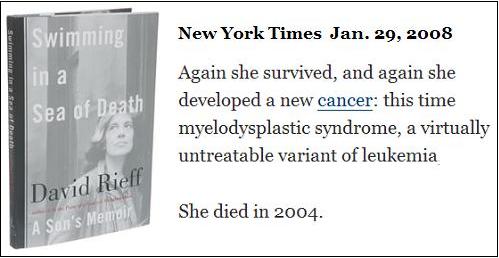
Month: February 2008

  • Epiphany for Roy, Part I

    The timestamp of this entry, 4:23 AM, may be regarded as a memorial to Fra' Andrew Bertie (see Andrew Cusack's journal). It was at about this time that I heard of Fra' Andrew's death. The timestamp is a reference to Shakespeare's birthday and to the following thought:

    Page 162 of Orthodoxy, by G. K. Chesterton (1908), reprinted in 1995 by Ignatius Press, San Francisco--

    The man who lives in contact with what he believes to be a living
    Church is a man always expecting to meet Plato and Shakespeare tomorrow
    at breakfast. He is always expecting to see some truth that he has
    never seen before.

    The entry itself was written later... on the morning of Monday, Feb. 11, 2008. For a similar reference of sorts, to Plato, see "Epiphany for Roy, Part II" (timestamped 7:59 AM Sunday, Feb. 10, 2008).

  • Cheap Epiphany continued:

    Prizes and Rewards

    "... like the victors in the games   
    collecting their prizes,
        we receive our reward...."
    -- Conclusion of
    Plato's Republic

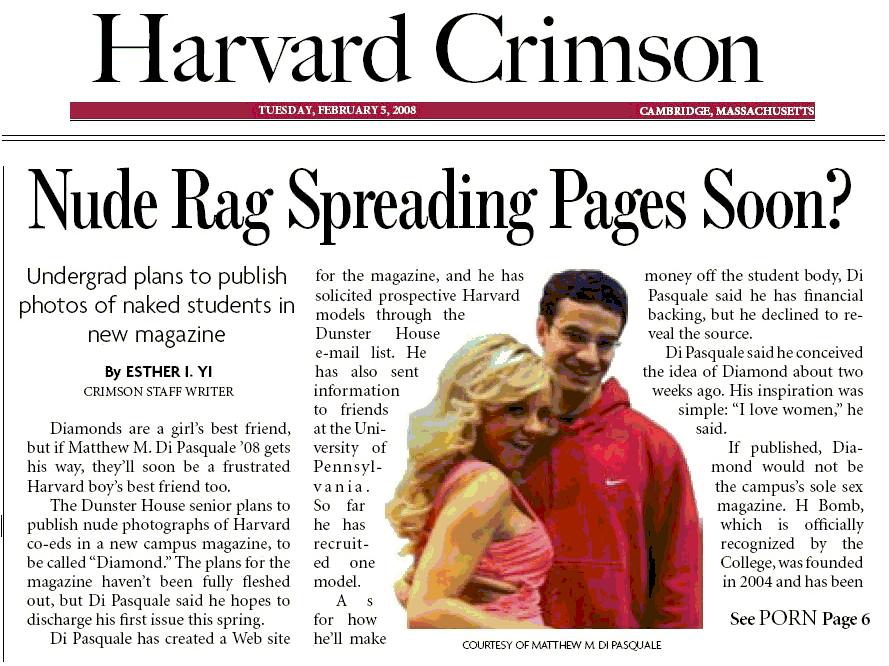
    From The Harvard Crimson
    front page on
    Mardi Gras, 2008:

    Harvard senior Matthew Di Pasquale
    plans a new campus magazine called
    "Diamond"--

    New magazine 'Diamond' planned at Harvard
    Click to enlarge
    .

    Related material:

    The Crimson Passion:
    A Drama at Mardi Gras

  • The Prize:

    The Football
    Mandorla

    New York Lottery, 2008:

    NY Lottery Feb. 6, 2008: Mid-day 064, Evening 701

    The Mandorla as Football

    7/01 

    "He pointed at the football

      on his desk. 'There it is.'"
    -- Glory Road   

      "The Rock" -- 

    Goodspeed:
    "I'll do my best."

    Mason:
    "Your best. Losers
    always whine about
    their
    best. Winners
    go home and ...."

    "The
    Wu  Li
    Masters know
    that physicists are
    doing  more  than
    'discovering  the endless
     diversity of nature.' They
     are  dancing
    with Kali
    ,
     the Divine Mother of
     Hindu  mythology."
     -- Gary Zukav,
     Harvard
     '64


  • Musical Brocade

    NASA Meets Jesus
    continued from
    Feb. 5, 2003

    NASA antenna

    NASA Says,
    "Hello, Universe.
     Meet the Beatles."


    The release date

     of the DVD of
     Julie Taymor's
    Beatles tribute
    "Across the Universe"
    was the same as that of
    Maharishi Mahesh Yogi--
    February 5, 2008

    "Any day now, any day now,
     I shall be released."
    -- Bob Dylan in
    "NASA Meets Jesus,"
    February 5, 2003

    Related material:
    Happy Birthday,
    John O'Hara

  • Philosophy at Mardi Gras

    A literary complaint:

    Philip Larkin on his fear of death--

    This is a special way
       of being afraid
    No trick dispels.
       Religion used to try,
    That vast, moth-eaten
       musical brocade
    Created to pretend
       we never die....

    A literary response
    quoted in
    The Last Enemy
    :

    Stately, plump Buck Mulligan came from the stairhead, bearing a bowl of
    lather on which a mirror and a razor lay crossed. A yellow
    dressinggown, ungirdled, was sustained gently behind him by the mild
    morning air. He held the bowl aloft and intoned:

    -- Introibo ad altare Dei.

    Halted, he peered down the dark winding stairs and called up coarsely:

    -- Come up, Kinch! Come up, you fearful jesuit!

    Solemnly he came forward and mounted the round gunrest. He faced
    about and blessed gravely thrice the tower, the surrounding country and
    the awaking mountains. Then, catching sight of Stephen Dedalus, he bent
    towards him and made rapid crosses in the air, gurgling in his throat
    and shaking his head. Stephen Dedalus, displeased and sleepy, leaned
    his arms on the top of the staircase and looked coldly at the shaking
    gurgling face that blessed him, equine in its length, and at the light
    untonsured hair, grained and hued like pale oak.

    Buck Mulligan peeped an instant under the mirror and then covered the bowl smartly.

    -- Back to barracks! he said sternly.

    He added in a preacher's tone:

    -- For this, O dearly beloved, is the genuine Christine: body
    and soul and blood and ouns. Slow music, please. Shut your eyes, gents.
    One moment. A little trouble about those white corpuscles. Silence,
    all.

    He peered sideways up and gave a long low whistle of call, then
    paused awhile in rapt attention, his even white teeth glistening here
    and there with gold points. Chrysostomos. Two strong shrill whistles
    answered through the calm.

    -- Thanks, old chap, he cried briskly. That will do nicely. Switch off the current, will you?

    -- James Joyce, Ulysses

    From a musical brocade:

    "My shavin' razor's cold
     and it stings."

    -- John Stewart,
        who died on January 19

    For the rest of
    the brocade, see
    The Last Enemy.

    Related material:

    The Crimson Passion:
    A Drama at Mardi Gras

    and the quote by Susan Sontag
    in yesterday's entry,
    as well as a recent
    New York Times book review:

    NYT review of a book on the death of Susan Sontag

    "Slow music, please.
     Shut your eyes, gents.
     One moment. A little trouble
     about those white corpuscles.
     Silence,
    all."

     Ite, missa est.
  • ART WARS continued:

    New York Lottery,
     
    Super Bowl Sunday, 2008:

    NY Lottery Feb. 3, 2008: Mid-day 408, Evening 888

    Susan Sontag,
     
    "Against Interpretation"

    "Of course, I don't mean interpretation in the
    broadest sense, the sense in which Nietzsche (rightly) says, 'There are no facts,
    only interpretations.' By interpretation, I mean here a conscious act of the mind
    which illustrates a certain code, certain 'rules' of interpretation."

    A Certain Code

    Edward Gibbon on the Trinity:

    "perhaps the deepest and darkest corner of
    the whole theological abyss"

    Friedrich Nietzsche on the abyss:

    "Whoever fights monsters should see to it that in the
    process he does not become a monster.  And when you look long into
    an abyss, the abyss also looks into you."

    Frank Sinatra on narrative:

    "You gotta be true to your code."

    The Lottery Code:

    Log24, Feb. 27, 2007

  • Readings for Candlemas

    Matthew had a couple of hours on his hands before dinner with the Kanes, so he drifted up to the only grassy spot in Twenty-Mile, the triangular, up-tilted little meadow crossed by a rivulet running off from the cold spring that provided the town's water. This meadow belonged to the livery stable, and half a dozen of its donkeys lazily nosed in the grass while, at the far end, a scrawny cow stood in the shade of the only tree in Twenty-Mile, a stunted skeleton whose leafless, wind-raked branches stretched imploringly to leeward, like bony fingers clawing the clouds. The meadow couldn't be seen from any part of the town except the Livery, so Matthew felt comfortably secluded as he sauntered along, intending to investigate the burial ground that abutted the donkey meadow, but B. J. Stone called to him from the Livery, so he turned back and began the chore they had found for him to do: oiling tools.

    LATER....

    After they did the dishes, Matthew and Ruth Lillian walked down the Sunday-silent street, then turned up into the donkey meadow. He was careful to guide her away from the soggy patch beneath the tree, where the Bjorkvists had slaughtered that week's beef. Lost in their own thoughts, they strolled across the meadow, the uneven ground causing their shoulders to brush occasionally, until they reached the fenced-in burying ground.

    STILL LATER....

    "Matthew?" she asked in an offhand tone.

    "Hm-m-m?"

    "What's 'the Other Place'?"

    He turned and stared at her. "How do you know about that?"

    "You told me."

    "I never!"

    "Yes, you did. You were telling about your fight with the Benson boys, and you said you couldn't feel their punches because you were in this 'Other Place.' I didn't ask you about it then, 'cause you were all worked up.  But I've been curious about it ever since."

    "Oh, it's just..." In a gesture that had something of embarrassment in it and something of imitation, he threw his stick as hard as he could, and it whop-whop-whop'd through the air, landing against the sagging fence that separated the burying ground from the donkey meadow.

    "If you don't want to tell me, forget it.  I just thought... Never mind." She walked on.

    "It's not that I don't want to tell you. But it's... it's hard to explain."

    She stopped and waited patiently.

    "It's just... well, when I was a little kid and I was scared-- scared because Pa was shouting at Ma, or because I was going to have to fight some kid during recess-- I'd fix my eyes on a crack in the floor or a ripple in a pane of glass-- on anything, it didn't matter what-- and pretty soon I'd slip into this-- this Other Place where everything was kind of hazy and echoey, and I was far away and safe. At first, I had to concentrate real hard to get to this safe place. But then, this one day a kid was picking on me, and just like that-- without even trying-- I was suddenly there, and I felt just as calm as calm, and not afraid of anything. I knew they were punching me, and I could hear the kids yelling names, but it didn't hurt and I didn't care, 'cause I was off in the Other Place.  And after that, any time I was scared, or if I was facing something that was just too bad, I'd suddenly find myself there. Safe and peaceful." He searched here eyes. "Does that make any sense to you, Ruth Lillian?"

    "Hm-m... sort of. It sounds kind of eerie." And she added quickly, "But really interesting!"

    "I've never told anybody about it. Not even my ma. I was afraid to because... This'll sound funny, but I was afraid that if other people knew about the Other Place, it might heal up and go away, and I wouldn't be able to get there when I really needed to. Crazy, huh?"
  • Annals of Philosophy:

    Kindergarten Theology

    On the late James Edwin Loder,
    a Presbyterian minister and
    a professor of Christian education
    at Princeton Theological Seminary,
    co-author of The Knight's Move (1992):

    "At his memorial service his daughter Tami told the story of 'little
    Jimmy,' whose kindergarten teacher recognized a special quality of mind
    that set him apart. 'Every day we read a story, and after the story is
    over, Jimmy gets up and wants to tell us what the story means.'" -- Dana R. Wright

    For a related story about
    knight moves and kindergarten,
    see Knight Moves: The Relativity
    Theory of Kindergarten Blocks
    ,
    and Log24, Jan. 16, 17, and 18.

    See also Loder's book
    (poorly written, but of some
    interest in light of the above):

    The Knight's Move, by Loder and Neidhardt

    Opening of The Knight's Move --

    "In a game of chess, the knight's move is unique because it alone goes around corners. In this way, it combines the continuity of a set sequence with the discontinuity of an unpredictable turn in the middle. This meaningful combination of continuity and discontinuity in an otherwise linear set of possibilities has led some to refer to the creative act of discovery in any field of research as a 'knight's move' in intelligence.

    The significance of the title of this volume might stop there but for Kierkegaard's use of the 'knight' image. The force of Kierkegaards's usage might be described in relation to the chess metaphor by saying that not merely does Kierkegaard's 'knight of faith' undertake a unique move within the rules of the human game, but faith transposes the whole idea of a 'knight's move' into the mind of the Chess Master Himself. That is to say, chess is a game of multiple possibilities and interlocking strategies, so a chess master must combine the  continuity represented by the whole complex of the game with the unpredictable decision he must make every time it is his turn. A master chess player, then, does not merely follow the rules; in him the game becomes a construct of consciousness. The better the player the more fully the game comes into its own as a creation of human intelligence. Similarly, for Kierkegaard, the knight of faith is a unique figure in human experience. The knight shows how, by existing in faith as a creative act of Christ's Spirit, human existence comes into its own as an expression of the mind of Christ. Thus, the ultimate form of a 'knight's move' is a creative act raised to the nth power by Spiritus Creator, but it still partakes fully in the concrete pieces and patterns that comprise the nature of the human game and the game of nature."

    -- James E. Loder and W. Jim Neidhardt (Helmers & Howard Publishing, 1992)

    For a discussion, see Triplett's
    "Thinking Critically as a Christian."

    Many would deny that such
    a thing is possible; let them
    read the works of T. S. Eliot.

    Related material:

    The Knight's Move
    discusses (badly) Hofstadter's
    "strange loop" concept; see
    Not Mathematics but Theology
    (Log24, July 12, 2007).