Month: April 2007

  • Shine On continued:

    Shine On, Hermann Weyl --

    "Be on the lookout for
    Annie Dillard's sequel to

    Teaching a Stone to Talk
    titled
    Teaching a Brick to Sing."

    William Butler Yeats --

    "Poets and Wits about him drew;

    'What then?' sang Plato's ghost.
       'What then?'

    'The work is done,'
       grown old he thought,

    'According to my boyish plan;

    Let the fools rage,
       I swerved in naught,

    Something to perfection brought';

    But louder sang that ghost,
       'What then?'
    "

    Duet

    Scarlett Johansson --

    "Let's give 'em somethin'
       to talk about,

    A little mystery
       to figure out"

    (Saturday Night Live,
     April 21, 2007)

    Plato's ghost --

    "The clothes she wears,
       the sexy ways,

    Make an old man wish
       for younger days

    She knows she's built
       and knows how to please

    Sho 'nuff can knock
       a strong man to his knees

    She's a brick... house...
    Mighty mighty,
       just lettin' it all hang out

    She's a brick... house...

    The lady's stacked
       and that's a fact,

    Ain't holdin' nothin' back.

    Shake it down,
       shake it down now"

  • Shine On

    Epigraphs to
    The Shining:

    Shine on... shine on...  
    There is work to be done
         in the dark before dawn
    There is work to be done
        so you've got to shine on

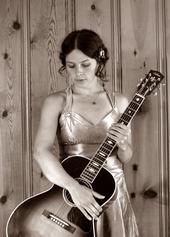
    -- Daisy May Erlewine of
        Big Rapids, Michigan

    Related material:

    Shine On, Hermann Weyl
    and
    the five Log24 entries of
    Saturday, April 14, 2007

  • Speech and Multispeech

    Speech

    In Grand Rapids today...

    "... Bush spoke and answered audience
    questions for nearly 90 minutes inside East Grand Rapids High School in
    suburban Grand Rapids....

    After leaving the school, Bush's motorcade stopped at
    the Gerald R. Ford Presidential Museum in downtown Grand Rapids, where
    he stood silently for a few moments after placing a bouquet of white
    roses at Ford's burial site on the museum grounds. The 38th president,
    who grew up in Grand Rapids, died Dec. 26 at age 93."

    Multispeech

    Mich. Lottery Apr. 20, 2007: Day 019, Night 001

    For the meaning of the lottery icons
    above, see this morning's entry and
    an entry that it links to --
    Time's Labyrinth continued --
    of March 8, 2007.

    For the meaning of multispeech,
    see the entries of
    All Hallows' Eve, 2005:

    Tesseract on the cover of The Gameplayers of Zan
     
    "There is such a thing

    as a tesseract."

    -- A Wrinkle in Time 

  • Columbine Day

    Icons

    Part I

    The Library of Congress
    Today in History, April 20:

    "American sculptor Daniel Chester French was born in Exeter, New Hampshire on April 20, 1850. His colossal seated figure of Abraham Lincoln presides over the Lincoln Memorial.

    Reared in Cambridge and Concord, Massachusetts, he was embraced by members of the Transcendentalist community including Ralph Waldo Emerson. Author and fellow Concord resident Louisa May Alcott encouraged young French to pursue a career as an artist. Louisa's sister, artist May Alcott, was his early teacher.

    French studied in Boston and New York prior to receiving his first commission for the 1875 statue The Minute Man.
    Standing near the North Bridge in Concord, in the Minute Man National
    Historical Park, this work commemorates events at the North Bridge, the
    site of 'the shot heard 'round the world.' An American icon, images
    derivative of The Minute Man statue appeared on defense bonds, stamps, and posters during World War II."

    Part II:

    Entertainment Weekly,

    November 7, 2003 --

    Keanu Reeves, Entertainment Weekly, Nov. 7, 2003

    Part III:

    Log24 on the anniversary of
    Lincoln's assassination --

    Saturday, April 14, 2007  4:30 AM

    The Sun Also Sets, or...

    This Way to
    the Egress

    Continued from April 12:

    "I have only come here 
    seeking knowledge,
     Things they would not   
           teach me of in college...."
     
    -- Synchronicity
    lyrics


    Quoted in Log24,
    Time's Labyrinth continued:

    "The
    sacred axe was used to kill the King. The ritual had been the same
    since the beginning of time. The game of chess was merely a
    reenactment. Why hadn't I recognized it before?"

    -- Katherine Neville,
    The Eight,

    Ballantine reprint, 1990,


    "Know the one about
    the Demiurge and the
    Abridgment of Hope?"

    -- Robert Stone,
    A Flag for Sunrise,
    Knopf, 1981,
    the final page

    Part IV:

    Log24 entry of

    November 7, 2003
    --

    Nixon's the One button

    -- and a
    student play from
    Virginia Tech:

    Play by Virginia Tech student

    Part V:


    Symmetry
    for Beavis and Butt-Head

    and
    The Rhetoric of Scientism:

    It's a very ancient saying,
    But a true and honest thought,
    That if you become a teacher,
    By your pupils you'll be taught.

    -- Oscar Hammerstein,
    "Getting to Know You"

  • Drama Workshop

    Acting Out


    From the Library of Congress:

    On April 19, 1775, troops under the command of
    Brigadier General Hugh Percy played "Yankee Doodle" as they marched
    from Boston to reinforce British soldiers already fighting the
    Americans at Lexington and Concord. Whether sung or played on that occasion, the tune was martial and intended to deride the colonials:

    Yankee Doodle came to town,
    For to buy a firelock;
    We will tar and feather him
    And so we will John Hancock.

    (CHORUS)
    Yankee Doodle, keep it up,
    Yankee Doodle Dandy,
    Mind the Music and the step,
    And with the girls be handy.

    There are numerous conflicting accounts of the origin of "Yankee
    Doodle." Some credit its melody to an English air, others to Irish,
    Dutch, Hessian, Hungarian and Pyrenean tunes or a New England jig....

    "Yankee Doodle" was well known in the New England colonies before
    Lexington and Concord but only after the skirmishes there did the
    American militia appropriate it. Tradition holds that the colonials
    began to sing it as they forced the British back to Boston on April 19, 1775, after the battles of Lexington and Concord. It is documented that the Americans sang the following verse at Bunker Hill:

    Father and I went down to camp,
    along with Captain Good'in,
    And there we see the men and boys
    as thick as hasty puddin'. 

    From 30 Rock:

    "Thanks to you, I die like Jesus Christ, to inspire generations of the weak and the defenseless people.''

    "It's not for me. For my children, for my brothers and sisters... I did it for them.''

    From Log24:

    James Cagney and Herald Square peace march ad


    Eureka!

    Max Bialystock discovers a new playwright

  • Playwriting Class

    Vigil

    Candlelight vigil at Virginia Tech, April 17, 2007

    Andrew Russell, Pittsburgh Tribune-Review

    Candlelight vigil at Virginia Tech,
    Tuesday, April 17, 2007

    VA lottery April 17, 2007: Day 826, Night 102.

    Virginia Lottery, Tuesday, April 17, 2007

    Candlelight Vigil, Pittsburgh Tribune-Review

    "I love those Bavarians... so meticulous."

    -- "In the Garden of Allah"

    Click on images to enlarge.

  • Happy Birthday, Benedict XVI...

    The Abridgment of Hope

    Part I: Framework

    From Log24,
    Here's Your Sign,
    Aug. 8, 2002--

    "Paz also mentions the Christian
    concept of eternity as a realm outside time, and discusses what
    happened to modern thought after it abandoned the concept of eternity.

    Naturally, many writers have dealt with the subject of time, but it seems particularly part of the Zeitgeist
    now, with a new Spielberg film about precognition.  My own small
    experience, from last night until today, may or may not have been
    precognitive.  I suspect it's the sort of thing that many people often
    experience, a sort of 'So that's what that was about' feeling.  Traditionally, such experience has been expressed in terms of a theological framework."

    Part II: Context

    From Ann Copeland,
    "Faith and Fiction-Making:

    The Catholic Context"--

    "Each of us is living out a once-only story which, unlike those mentioned here, has yet
    to reveal its ending. We live that story largely in the dark. From time to time we may try
    to plumb its implications, to decipher its latent design, or at least get a glimmer of how
    parts go together. Occasionally, a backward glance may suddenly reveal implications, an
    evolving pattern we had not discerned, couldn't have when we were 'in' it. Ah,
    now I see what I was about, what I was after."

    Part III: Context Sensitivity

    From Log24's
    Language Game,
    Jan. 14, 2004--

    Ludwig Wittgenstein,
    Philosophical Investigations:

    373. Grammar tells what kind of object anything is. (Theology as grammar.)


    From Wikipedia
    --

    Another definition of context-sensitive grammars defines them as formal grammars where all productions are of the form

    a yields b where the length of a is less than or equal to the length of b

    Such a grammar is also called a monotonic or noncontracting grammar because none of the rules decreases the size of the string that is being rewritten.

    If the possibility of adding the empty string to a language is added
    to the strings recognized by the noncontracting grammars (which can
    never include the empty string) then the languages in these two
    definitions are identical.

     Part IV: Abridgment


    "Know the one about the Demiurge and the Abridgment of Hope?"

    -- Robert Stone, A Flag for Sunrise, Knopf, 1981, the final page, 439

    Also from Stone's novel, quoted by Ann Copeland in the above essay:


    You after all? Inside,
    outside, round and about. Disappearing stranger, trickster. Christ, she thought, so far.
    Far from where?

    But why always so far?

    "Por qué?" she asked. There was a guy yelling.

    Always so far away. You. Always so hard on the kid here, making me be me right down the
    line. You old destiny. You of Jacob, you of Isaac, of Esau.

    Let it be you after all. Whose after all I am. For whom I was nailed.

    So she said to Campos: "Behold the handmaid of the Lord." (416)

  • Credit Where Credit Is Due

    The Sun
    Also Rises
     

    Broken Symmetries by Paul Preuss

    Hexagram 35
     
    THE IMAGE
     
    The sun rises over the earth:
    The image of PROGRESS.
     
     
      10:18:35 AM ET
     
    Related material:
     
     
    and
     
    today's New York Times
    obituaries (previous entry)
     

  • I mean, seriously...

    From this morning's
    online New York Times:

    Don Ho Dies

    Mahalo and Selah.

  • But seriously...

    Entertainment Tonight

    "What is the spirit of the bayonet?"

    -- United States Army
    training question, 1964

    A partial answer
    in two parts:

    Part I --

    Another question --


    "Know the one about
    the Demiurge and the
    Abridgment of Hope?"

    -- Robert Stone,
    A Flag for Sunrise,
    Knopf, 1981,
    the final page, 439,
    cited by page number
    here this morning


    Part II --

    The image “http://www.log24.com/log07/saved/070414-PAlottery.jpg” cannot be displayed, because it contains errors.

    Today's numbers, in
    this morning's context,
    strongly suggest
    a look at
    A Flag for Sunrise,
    by Robert Stone,
    Knopf, 1981,

    page 431,
    and at
    Hexagram 34,

    The Power of the Great,
    in the context of a
    Log24 entry for
    October 8, 2005
    .

    "There is no teacher
    but the enemy.
    "
    -- Orson Scott Card,
    Ender's Game

    Related entertainment:
    the previous entry
    and the Vietnam memoir
    Black Virgin Mountain.