Hamlet’s Transformation,
continued from Sept. 6:

Click on picture
for details.
Best Wishes for a
C. S. Lewis
Christmas

Image of Lewis from |
“What on earth is a concrete universal?” – Robert M. Pirsig, author of Zen and the Art of Motorcyle Maintenance For one approach to an answer, click on the picture at left. |
Update of 4:23 PM:
The
Lewis link above deals with the separation of Heaven from Hell.
The emphasis is on Heaven. A mysterious visitor to this website,
“United States,” seems to be seeking equal time for Hell. And
so…
TIME
OF DATE
OF
PAGE VISITED
VISIT PAGE VISITED
1217 040520 Parable
1218 060606 The Omen
1220 051205 Don’t Know Much About History
1225 030822 Mr. Holland’s Week (And in Three Days…)
1233 030114 Remarks on Day 14 (What is Truth?)
1238 040818 Train of Thought (Oh, My Lolita)
1244 020929 Angel Night (Ellis Larkins)
1249 040715 Identity Crisis (Bourne and Treadstone)
1252 050322 Make a Differance (Lacan, Derrida, Reba)
1255 050221 Quarter to Three on Night of HST’s death
1256 040408 Triple Crown on Holy Thursday
1258 040714 Welcome to Mr. Motley’s Neighborhood
1258 030221 All About Lilith
0103 040808 Quartet (for Alexander Hammid)
0104 030106 Dead Poet in the City of Angels
0109 030914 Skewed Mirrors (Readings on Aesthetics)
0110 050126 A Theorem in Musical Form
0125 021007 Music for R. D. Laing
0138 020806 Butterflies & Popes (Transfiguration)
0140 060606 The Omen (again)
0156 030313 ART WARS: Perennial Tutti-Frutti
0202 030112 Ask Not (A Bee Gees Requiem)
0202 050527 Drama of the Diagonal, Part Deux
0202 060514 STAR WARS continued (Eclipse and Venus)
0207 030112 Ask Not (again… Victory of the Goddess)
0207 030221 All About Lilith (again… Roll credits.)
Author of
Hamlet
The texts in question are said
to be manuscripts of
“Pierre Menard, Author of the Quixote,”
and “The Library of Babel.”
The latter deals (like
“The Mountains of Pi“)
with literature that can
be seen as the result
of a random process–
such as the lottery in
another story by Borges.
A less sinister lottery
is that of Pennsylvania–
known to some as
”the Keystone State.”
I prefer to think of it as
“the State of Grace.”

Click on picture for details.

The “NITE” number 108 leads us
naturally to 1/08:
| Sunday, January 08, 2006
|
Another figure from 1/08,
St. Mary Magdalene, might,
adapting the words of Borges,
offer the following observation:
“Shakespeare’s text and the lottery’s
are verbally
identical, but the second
is almost infinitely richer.
(More ambiguous, detractors will
say, but ambiguity is richness.)”
Related material: 11/22.
J. G. Ballard on “the architecture of death“:
“… a huge system of German fortifications that included the Siegfried
line, submarine pens and huge flak towers that threatened the
surrounding land like lines of Teutonic knights. Almost all had
survived the war and seemed to be waiting for the next one, left behind
by a race of warrior scientists obsessed with geometry and death.”
– The Guardian, March 20, 2006
“For him, writing is a struggle both with geometry and death.”
– “The Duende,” American Poetry Review, July/August 1999
absolute intellectual honesty,
and the effect is sheer liberation….
The disposition of the material is
a model of logic and clarity.”
– Harper’s Magazine review
quoted on back cover of
Cubism and Twentieth-Century Art,
by Robert Rosenblum
(Abrams paperback, 2001)
– An Annotated Listing of Criticism
by Linnea Hendrickson
“She returned the smile, then looked
across the room to her youngest
brother,
Charles Wallace, and to their father,
who were deep in
concentration, bent
over the model they were building
of a tesseract: the square squared,
and squared again: a construction
of the dimension of time.”
by Madeleine L’Engle

For “the dimension of time,”
see A Fold in Time,
Time Fold, and
Diamond Theory in 1937.
For a more adult audience –
In memory of General Augusto Pinochet, who died yesterday in
Santiago, Chile, a quotation from Federico Garcia Lorca‘s lecture on “the Duende” (Buenos Aires, Argentina, 1933):
“Time and chance
happeneth to them all.”
– Ecclesiastes
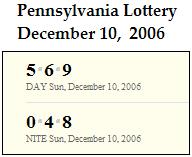

The number 048
may be interpreted
as referring to…
Rosetta Stone:

“Function defined form,
expressed in a pure geometry
that the eye could easily grasp
in its entirety.”
– J. G. Ballard on Modernism
(The Guardian, March 20, 2006)
“The greatest obstacle to discovery
is not ignorance –
it is the illusion of knowledge.”
– Daniel J. Boorstin,
Librarian of Congress,
quoted in Beyond Geometry
“… in 1896 Alfred Nobel,
the inventor of dynamite and
founder of the Nobel prizes,
died in San Remo, Italy,
at age 63.”
– “Today in History,”
by The Associated Press
author and co-producer of
The Librarian: Quest for the Spear.
A Piece of Justice.
From a summary of the novel:
“Like all men of the Library,
I have traveled in my youth.”
– Jorge Luis Borges,
The Library of Babel
“Papá me mandó un artículo
de J. G. Ballard en el que
se refiere a cómo el lugar
de la muerte es central en
nuestra cultura contemporánea.”
– Sonya Walger,
interview dated September 14
(Feast of the Triumph of the Cross),
Anno Domini 2006

Sonya Walger,
said to have been
born on D-Day,
the sixth of June,
in 1974
Walger’s father is, like Borges,
from Argentina.
She “studied English Literature
at Christ Church College, Oxford,
where she received
a First Class degree…. “
“… un artículo de J. G. Ballard….”–
A Handful of Dust, by J. G. Ballard
(The Guardian, March 20, 2006):
Death was what the Atlantic wall and Siegfried line were all about….
…
modernism of the heroic period, from 1920 to 1939, is dead, and it died
first in the blockhouses of Utah beach and the Siegfried line…


“This is the garden of Apollo,
the field of Reason….”
– John Outram, architect
(Click on picture for details.)

Related material:
| The Lottery 12/9/06 | Mid-day | Evening |
| New York | 036
See |
331
See 3/31– “square crystal” and “the symbolism could not have been more perfect.” |
| Pennsylvania | 602
See 6/02– Walter Benjamin |
111
See 1/11– “Related material: |


Readings on Aesthetics for the
Feast of the Triumph of the Cross:
“We’re not here to stick a mirror on you. Anybody
can do that, We’re here to give you a more cubist or skewed mirror,
where you get to see yourself with fresh eyes. That’s what an artist
does. When you paint the Crucifixion, you’re not painting an exact
reproduction.”
– Julie Taymor on “Frida” (AP, 10/22/02)
|
“Saint Francis Borgia at the Deathbed of an Impenitent [above], painted by Francisco Goya (1746-1828) in 1788, is
one of the most astonishing works in an oeuvre replete with remarkable images. In the decade and a half since its inclusion in Robert Rosenblum‘s survey* of nineteenth-century art, this canvas has become widely known among scholars and their students. Rosenblum, following a line of interpretation that dates back to the middle of the nineteenth century, uses this painting to support a symptomatic reading of Goya’s art, which he describes as ‘the most sharply accurate mirror of the collapse of the great religious and monarchic traditions of the West.’” – Andrew Schulz in The Art Bulletin, Dec. 1, 1998 * 19th-Century Art, by H. W. Janson and Robert Rosenblum, 1984 |
For more on
St. Francis Borgia, see
In Lieu of Rosebud.


Kate Beckinsale, adapted from
poster for Underworld: Evolution
(DVD release date 6/6/6)


