For one definition, see
Tombstone (typography)
at Wikipedia.
A halmos, according to
the Wikipedia definition:

Click on the halmos
for further details from
today's New York Times.
A halmos, according to
the Wikipedia definition:

Click on the halmos
for further details from
today's New York Times.
Thanks to Peter Woit's weblog
for a link to the above illustration.
This picture of
"Coxeter Exhuming Geometry"
suggests the following comparison:

For the second tombstone,
see this morning's entry,
Birth, Death, and Symmetry.
Further details on the geometry
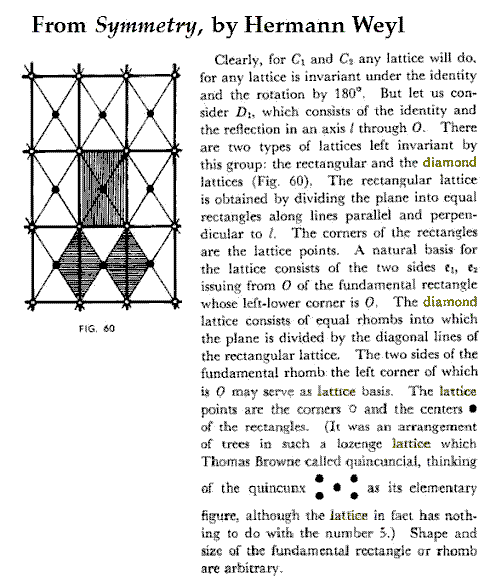
underlying the second tombstone:

The above is from
Variable Resolution 4–k Meshes:
Concepts and Applications (pdf),
by Luiz Velho and Jonas Gomes.
See also Symmetry Framed
and The Garden of Cyrus.
| "That corpse you planted last year in your garden, Has it begun to sprout? Will it bloom this year? Or has the sudden frost disturbed its bed?" -- T. S. Eliot, "The Waste Land" |
(Born Oct. 19, 1605,
died Oct. 19, 1682)

Browne is noted for
Hydriotaphia (Urne-Buriall)
and The Garden of Cyrus.
Related material:

![]() |
Established in 1916, Montreat College is a private, Christian college located in a beautiful valley in the Blue Ridge Mountains of North Carolina. |
| "To measure the changes of time and space the smartest are nothing." |
-- Shing-Tung Yau,
The Emperor of Math
and Harvard philosopher
Illustrations --
To measure the changes:

The smartest are nothing:

"The much-honored
mathematician
Shing-Tung Yau"
Numbers
from the
Keystone State
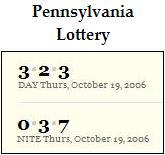
on October 16:

For an interpretation
of 596, see Wikipedia,
596 (nuclear test):
"596 is the codename of the
People's Republic of China's
first nuclear weapons test,
detonated on
October 16, 1964."

Related material:
| Beautiful indeed is the source of truth. To measure the changes of time and space the smartest are nothing." |
Characters
Two items from a Wikipedia watchlist today:
1. User Loyola added a list of central characters to the article on The Glass Bead Game.
2. A dialogue between the Wikipedia characters Prof02 and Charles Matthews continues.
Item 2 seems almost to echo item 1.
The Bead Game, a classic novel by Hermann Hesse, is, in part, a
commentary on German cultural history, and the Prof02-Matthews dialogue
concerns the Wikipedia article on Erich Heller, a noted scholar of German cultural history.
Matthews is an expert on the game of Go. The Bead Game article says that
"The Game derives its name from the fact that it was originally played with tokens, perhaps analogous to those of an abacus or the game Go....
Although invented after Hesse's death, Conway's Game of Life can be seen as an example of a Go-like glass bead game with surprisingly deep properties; since it can encode Turing machines, it contains in some sense everything."
For some related thoughts on cellular automata (i.e., Conway's game) and Go, see The Field of Reason with its links Deep Game, And So To Bed.
For some related thoughts on Turing, see the November 2006 Notices of the American Mathematical Society (special issue on Turing).
For some related religious reflections, see Wolfram's Theory of Everything and the Gameplayers of Zan, as well as the Log24 entries of last Halloween.
Cleavage Term
Snow is mainly remembered as the author of The Two Cultures and the Scientific Revolution (1959).
According to Orrin Judd, we can now see "how
profoundly wrong Snow was in everything except for his initial metaphor,
of a divide between science and the rest of the culture."
For more on that metaphor, see the previous entry, "The Line."
I prefer a lesser-known work of Snow-- his long biographical foreword to G. H. Hardy's A Mathematician's Apology. The foreword, like the book itself, is an example of what Robert M. Pirsig calls "Quality." It begins with these words:
"It was a perfectly ordinary night at Christ's high table, except that Hardy was dining as a guest."
Robert M. Pirsig, Zen and the Art of Motorcycle Maintenance, Part III:
"The
wave of crystallization rolled ahead. He was seeing two worlds,
simultaneously. On the intellectual side, the square side, he saw now
that Quality was a cleavage term. What every intellectual analyst looks
for. You take your analytic knife, put the point directly on the term
Quality and just tap, not hard, gently, and the whole world splits,
cleaves, right in two...
hip
and square, classic and romantic, technological and humanistic...and
the split is clean. There's no mess. No slop. No little items that
could be one way or the other. Not just a skilled break but a very
lucky break. Sometimes the best analysts, working with the most obvious
lines of cleavage, can tap and get nothing but a pile of trash. And yet
here was Quality; a tiny, almost unnoticeable fault line; a line of
illogic in our concept of the universe; and you tapped it, and the
whole universe came apart, so neatly it was almost unbelievable. He
wished Kant were alive. Kant would have appreciated it. That master
diamond cutter. He would see. Hold Quality undefined. That was the
secret."

See also the discussion of
subjective and objective
by Robert M. Pirsig in
Zen and the Art of
Motorcycle Maintenance,
Part III,
followed by this dialogue:
Are We There Yet?
Chris shouts, "When are we
going to get to the top?"
"Probably quite a way yet,"
I reply.
"Will we see a lot?"
"I think so. Look for blue sky
between the trees. As long as we
can't see sky we know it's a way yet.
The light will come through the trees
when we round the top."
Related material:
The Boys from Uruguay,
Lichtung!,
The Shining of May 29,
A Guiding Philosophy,
Ticket Home.
The philosophy of Heidegger
discussed and illustrated
in the above entries may
be regarded as honoring
today's 100th anniversary
of the birth of Heidegger's
girlfriend, Hannah Arendt.
See also

Recent Comments