Month: November 2005

  • Coincidence
    and Design

    Headline from a local newspaper this morning:

    Area Catholics Receive

    St. Thomas Aquinas Awards
     
    Headline from today's New York Times:

    Closing Arguments Made
    in Trial on Intelligent Design 

    Taken together, these headlines suggest that the following link (pdf) may be appropriate for today:

    Neutral Evolution
    and Aesthetics:

    Vladimir Nabokov

    and Insect Mimicry.

    Related material
    on Nabokov and theology:

    A Contrapuntal Theme

    Today's birthday:

    The image “http://www.log24.com/log/pix05B/051105-Swinton2.jpg” cannot be displayed, because it contains errors.

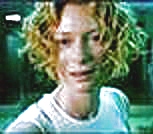
    Tilda Swinton,
    angel in
    "Constantine."

    "Gnostic also is the preposterous stage-direction at the end of Elizabeth Barrett Browning's Drama of Exile...

    The
    stars shine on brightly while ADAM and EVE pursue their way into the
    far wilderness. There is a sound through the silence, as of the falling
    tears of an angel.

    'How much noise,' inquires G. K.
    Chesterton with brutal common sense, 'is made by an angel's tears? Is
    it a sound of emptied buckets, or of mountain cataracts?'"

    -- Dorothy Sayers,
       The Mind of the Maker, Chapter 10

    For the answer, see

    A Contrapuntal Theme.

  • Bond

    USA Today on last night's White House dinner:

    "In his toast, Bush said the royal visit was 'a reminder of the unique and enduring bond' between the two countries."

    From Log24, July 18, 2003:

    The use of the word "idea" in my
    entries' headlines yesterday was not accidental.  It is related to
    an
    occurrence of the word in Understanding: On Death and Truth, a set
    of journal entries from May 9-12.  The relevant passage on "ideas" is
    quoted there, within commentary by an Oberlin professor:

    "That the truth we understand must be a truth we stand under
    is brought out nicely in C. S. Lewis' That Hideous Strength
    when Mark Studdock gradually learns what an 'Idea' is. While Frost
    attempts to give Mark a 'training in objectivity' that will destroy in
    him any natural moral sense, and while Mark tries desperately to find a
    way out of the moral void into which he is being drawn, he discovers
    what it means to under-stand.

    'He had never before known what an Idea meant: he had
    always thought till now that they were things inside one's own head.
    But now, when his head was continually attacked and often completely
    filled with the clinging corruption of the training, this Idea towered
    up above him-something which obviously existed quite independently of
    himself and had hard rock surfaces which would not give, surfaces he
    could cling to.'

    This too, I fear, is seldom communicated in the classroom,
    where
    opinion reigns supreme. But it has important implications for the way
    we understand argument."

    -- "On Bringing One's Life to a Point," by Gilbert
    Meilaender, First Things, November 1994

    The old philosophical conflict between realism and nominalism
    can,
    it seems, have life-and-death consequences.  I prefer Plato's
    realism,
    with its "ideas," such as the idea of seven-ness.  A reductio
    ad absurdum
     of nominalism may be found in the Stanford
    Encyclopedia of Philosophy under Realism:

    "A certain kind of nominalist rejects the existence claim
    which the
    platonic realist makes: there are no abstract objects, so sentences
    such as ‘7 is prime’ are false...."

    The claim that 7 is not prime is, regardless of its motives,
    dangerously stupid.

    The New York Lottery evening number
    for All Souls' Day, Nov. 2, 2005, was

    007.

    Related material:

    Entries for Nov. 1, 2005 and
    the song Planned Obsolescence
    by the 10,000 Maniacs

    (Hope Chest:
    The Fredonia Recordings)

  • To Serve Man

    The image “http://www.log24.com/log/pix05B/051102-Remains2.jpg” cannot be displayed, because it contains errors.

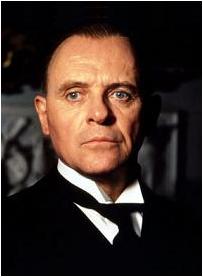
    Starring

    Sir Anthony Hopkins

    as Smithers
    (See previous entry.)

    In memory of Lloyd Bochner,
    who died on Oct. 29, 2005:

    "In his most memorable television role, Mr. Bochner starred as Michael
    Chambers in the famous 1962 'Twilight Zone' episode 'To Serve Man.'
    Chambers and his assistant are decoding experts in charge of
    translating a book given to Earth by visiting extraterrestrials. The
    assistant learns that it is a cookbook, but is too late to save Mr.
    Bochner's character from boarding a spaceship and heading toward
    becoming an alien meal."

    -- Monica Potts in today's New York Times

  • All Souls' Day

    Malcolm Lowry, Under the Volcano:

    "... Let me see, he was only praelector in my time...."
       "He was still praelector in mine."
       (In my time?... But what, exactly, does that mean?....)
    ....
       "He was beginning to get the wines and the first editions slightly mixed up in my day."....
       "Bring me a bottle of the very best John Donne, will you, Smithers?... You know, some of the genuine old 1611."
       "God how funny... Or isn't it?...."

    In memory of Malcolm Lowry, a quotation from Donne, 1611:

    And, Oh, it can no more be questioned,

    That beauties best, proportion, is dead,

    Since euen griefe it selfe, which now alone

    Is left vs, is without proportion.

    Shee by whose lines proportion should bee

    Examin'd measure of all Symmetree,

    Whom had the Ancient seene, who thought soules made

    Of Harmony, he would at next haue said

    That Harmony was shee, and thence infer.

    That soules were but Resultances from her,

    Here is a link to a later Cambridge praelector, Robert Alexander Rankin.  Rankin, a purveyor of pure mathematics, may help to counteract the pernicious influence on souls of Sir Michael Atiyah (see previous two entries and Plato, Pegasus, and the Evening Star).

  • The image “http://www.log24.com/log/pix05B/051101-Seal.gif” cannot be displayed, because it contains errors.

    The above seal is from an ad (pdf) for an Oct. 21 lecture, "The Nature of Space," by Sir Michael Atiyah, sponsored by the American Mathematical Society.

    The picture in the seal is of Plato's Academy.

    "The great philosopher Plato excluded from his Academy anyone
    who had
    not studied geometry.  He would have been delighted to admit Sir
    Michael Atiyah, who was for a time Savilian Professor of Geometry at
    Oxford..."


    Would he?

    Sir Michael Atiyah's
    Anti-Platonism

    "Mathematics is an evolution from the human brain, which
    is responding to outside influences, creating the machinery with which
    it then attacks the outside world. It is our way of trying to reduce
    complexity into simplicity, beauty and elegance....

    I tend to think that science and mathematics are ways the human mind
    looks and experiences-- you cannot divorce the human mind from it.
    Mathematics is part of the human mind. The question whether there is a
    reality independent of the human mind
    , has no meaning-- at least, we
    cannot answer it."

    -- Sir Michael Atiyah, interview in Oslo, May 2004

    "For Plato, the Forms represent truth, or reality.... these Forms are independent of the mind: they are eternal, unchanging and perfect."

    --  Roy Jackson (pdf)

    Atiyah's denial of a reality independent of the human mind may have something to do with religion:

    "Socrates and Plato were considered 'Christians before Christ'; they
    paved the way for the coming of Christianity by providing it with
    philosophical and theoretical foundations that would be acceptable to
    the western mind.
        In the analogy of the cave, the sun represents the
    Form of the Good. In the same way that the sun is the source of all
    things and gives light to them, the Form of the Good is over and above
    the other Forms, giving them light and allowing us to perceive them.
    Therefore, when you have awareness of the Form of the Good you have
    achieved true enlightenment. In Christianity, the Form of the Good
    becomes God: the source of all things."

    -- Roy Jackson, The God of Philosophy (pdf)

    See also the previous entry.

  • Antidote to Atiyah

    In a recent talk, "The Nature of Space," Sir Michael Atiyah
    gave a misleading description of Plato's doctrine of "ideas," or
    "idealism."  Atiyah said that according to Plato, ideas reside
    in  "an imaginary world--  the world of the mind," and that
    what we see in the external world is "some pale reflection" of ideas in
    the mind.

    An antidote to Atiyah's nonsense may be found in the Catholic Encyclopedia:

    "So it came to pass that the word idea in various languages
    took on more and more the meaning of 'representation,' 'mental image,'
    and the like. Hence too, there was gradually introduced the terminology
    which we find in the writings of Berkeley, and according to which
    idealism is the doctrine that ascribes reality to our ideas, i.e. our
    representations, but denies the reality of the physical world. This
    sort of idealism is just the reverse of that which was held by the
    philosophers of antiquity
    and their Christian
    successors; it does away with the reality of ideal principles by
    confining them exclusively to the thinking subject; it is a spurious
    idealism...."

    Atiyah contrasts his mistaken view of Plato with what he calls the
    "realism" of Hume.  He does not mention that Plato's doctrine of
    ideas is also known as "realism."  For details, see, again, the Catholic Encyclopedia:

    "The conciliation of the one and the many, the changing and the
    permanent, was a favourite problem with the Greeks; it leads to the
    problem of universals. The typical affirmation of Exaggerated Realism, the most outspoken ever made, appears in Plato's philosophy;
    the real must possess the attributes of necessity, universality, unity,
    and immutability which are found in our intellectual representations.
    And as the sensible world contains only the contingent, the particular,
    the unstable, it follows that the real exists outside and above the
    sensible world. Plato calls it eîdos, idea. The idea is absolutely stable and exists by itself (ontos on; auta kath' auta),
    isolated from the phenomenal world, distinct from the Divine and human
    intellect
    .... The
    exaggerated Realism of Plato... is the principal doctrine of his
    metaphysics."
     
    Atiyah's misleading remarks may appeal to believers in the contemptible
    religion of Scientism, but they have little to do with either historical reality or authentic philosophy.