ART WARS
continued
continued
From The New Yorker of June 6, 2005:
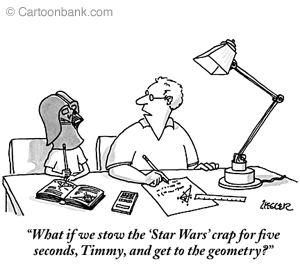
Recommended geometry:

Click on picture to enlarge.
Related material:
Recommended geometry:
Click on picture to enlarge.
Related material:
In memory of film producer Fernando Ghia:
"Among Ghia's solo credits as a producer is

|
The Road to Brussels
— Henry Kissinger, quoted in
Drama of the Diagonal, Part Deux "Les livres d’histoire et la vie racontent la même comédie...." — Alain Boublil
|
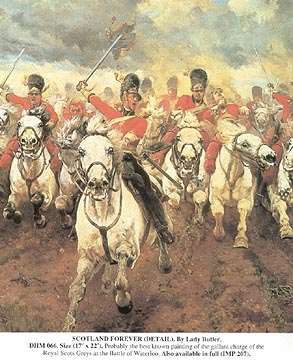
and found the above picture.
Related material:
Evil
Some academics may feel that a denunciation of an essay by one of their fellow academics as "evil" (see this morning's entry The Last Word) goes too far.
Here is a followup to that entry.
From the Riviera Presbyterian Church, a sermon quoting Madeleine L’Engle's classic A Wrinkle in Time:
|
For a moment there was the darkness of space, then another planet. The "It's the Thing!" Charles Wallace cried. "It's "Who have some of our fighters been?" Calvin asked. "Oh, And it is. Lift up your hearts, lift up your heads, catch the ball, |
Birthday Links
Today's birthdays:
Gene Wilder and Adrienne Barbeau.
For Gene:
A discussion of Frankenstein as
The Modern Prometheus at
Mathematics and Narrative.
For Adrienne:
Chinese Arithmetic.
The Last Word
Beethoven Week on the BBC ended at midnight June 10.
"With Beethoven, music did not grow up, it regressed to adolescence. He was a hooligan who could reduce Schiller’s Ode to Joy to madness, bloodlust, and megalomania."
-- Arts and Letters Daily, lead-in to an opinion piece in The Guardian of Tuesday, June 7, 2005:
| Beethoven Was a Narcissistic Hooligan
"If Beethoven had In A Clockwork Orange it  -- Dylan Evans, former Lacanian psychotherapist (pdf) and now head of the undergraduate robotics program at the University of the West of England. |
Speak for yourself, Dylan.
"Evil did not have
the last word."
-- Richard John Neuhaus, April 4, 2005
Evil may have had the last word in Tuesday's Guardian, but now that
Beethoven Week has ended, it seems time for another word.
For another view of Beethoven, in particular the late quartets, see the Log24 Beethoven's Birthday entry of December 16, 2002:
|
Beethoven's Birthday "Ludwig van Beethoven’s String Quartet in A Minor, Opus 132, In this third movement, the aging Beethoven speaks, clearly and This is music written by a supreme master at the height of his art, "Eliot's final poetic achievement—and, for many, his greatest—is the — Anonymous author at a "Each of the late quartets has a unique structure, and the structure of the Quartet in A Minor The third movement (Molto adagio) has a remarkable heading: — Eric Bromberger, In accordance with these passages, here is a web page with excellent Our site music for today, Beethoven's String Quartet No. 15 in A |
See also the previous entry.
Posted in USA TODAY
6/9/2005 11:40 PM:
A look at the job approval rating
of California Governor
Arnold Schwarzenegger
since his election in Oct. 2003.

Austrian Wins
Kyoto Prize

Austrian conductor Nikolaus Harnoncourt, 75,
was recognized for his ''exceptional creativity.''
Background:
For a sample of Harnoncourt conducting
Beethoven's "Ode to Joy," from the film
"A Clockwork Orange," see
The CMT Shop,
Simply the Best Movie Themes.
Peter Bates, Audiophile Audition:
"Harnoncourt's sense of drama is intense."
Test
This entry is in memory of Howard Eavenson Boyer, Jr., who, today's New York Times informs us, was born in Philadelphia on Oct. 26, 1943, and in his youth studied the 17th-century
metaphysical poets.
Later in life, Boyer worked for Harvard University Press, where he edited science books, including Mind Children: The Future of Robot and Human Intelligence (1988), by Hans Moravec.
Boyer died at 61 on May 4, 2005.
From Log24.net on Sept. 9, 2003,
 |
January 9, 1989, is the date of The New Yorker's review of Hans Moravec's Mind Children: The Future of Robot and Human Intelligence (Harvard University Press).
Brad Leithauser, reviewing Mind Children, says
that if Moravec "is correct in supposing that human minds will be
transferred into or otherwise fused with machines, it seems likely that
traditional religious questions -- and traditional religions themselves
-- will either melt away or suffer wholesale metamorphosis. Debates
about Heaven or Hell -- to take but one example -- would hold little
relevance for an immortal creature."
Au contraire. Immortal creatures-- such as, according to Christianity, human beings-- are the only creatures for whom such debates hold relevance.
For an example of such a debate, see
The Contrasting Worldviews of
Sigmund Freud and C.S. Lewis,
by Harvard psychiatrist Armand Nicholi.
For more on Nicholi, see my entry
of August 19, 2003,
April 21, 2005
'For Christ and Liberty'
Though
[it is] a purely Protestant institution (literally), I am rather fond of
Patrick Henry College. Indeed, it takes some courage in this day and
age to only admit students willing to sign a ten-point profession of
Protestant Reformed faith. They also happen to have an old-fashioned
ball featuring 'English country dancing, delicacies such as cream puffs
and truffles and leisurely strolls about the scenic grounds of the
historic Selma Plantation'.
Anyhow, the college, whose
motto is 'For Christ and Liberty', was visited [by] Anthony Esolen, a
contributing editor to Touchstone magazine, who makes these comments:
That such a request
came was no surprise. Its provenance is, and cheeringly so. For this De
Tocqueville Society is made up of a group of students at the new
Patrick Henry College, founded by Mike Farris, the President of the
Home School Legal Defense Association. More than ninety percent of the
college’s students were homeschooled. If there’s a Roman Catholic in
the bunch, I’ve yet to hear about it, and I’ve been to that campus
twice to give lectures. [Note: Esolen does not seem to be aware that
PHC requires its students to be Protestant.]
More on that in a moment. I
could spend all evening singing the praises of PHC (as the students
fondly call it), but let me share one discovery I made that should
gratify Touchstone readers. The first time I spoke there, two years
ago, I was stunned to meet young men and women who—who were young men
and women. I am not stretching the truth; go to Purcellville and see it
for yourselves if you doubt it; I believe my wife took a couple of
pictures, just to quiet the naysayers. The young men stand tall and
look you in the eye—they don’t skulk, they don’t scowl and squirm
uncomfortably in the back chairs as they listen to yet another analysis
of Rebecca of Sunnybrook Farm, or one of the healthier poems of Sylvia
Plath. They’re frank and generous and respectful, but they hold their
own in an argument, and they are eager to engage you in those. They are
comfortable in their skins; they wear their manhood easily. And the
young ladies are beautiful. They don’t wither away in class, far from
it; but they wear skirts, they are modest in their voices and their
smiles, they clearly admire the young men and are esteemed in turn;
they are like creatures from a faraway planet, one sweeter and saner
than ours.
Two years ago I spoke to them
about medieval Catholic drama. They are evangelicals, half of them
majors in Government, the rest, majors in Liberal Arts. They kept me
and my wife in that room for nearly three hours after the talk was
over. “Doctor Esolen, what you say about the habits of everyday life—to
what extent is it like what Jean Pierre de Coussade calls ‘the
sacrament of the present moment’?” “Doctor Esolen, do you see any
connections between the bodiliness of this drama and the theology of
Aleksandr Schmemann?” “Doctor Esolen, you have spoken a great deal
about our recovery of a sense of beauty, but don’t you think that
artists can also use the grotesque as a means of bringing people to the
truth?” “You’ve suggested to us that Christians need to reclaim the
Renaissance as our heritage, yet we are told that that was an age of
the worship of man for his own sake. To what extent is the art of that
period ours to reclaim?” And on and on, until nearly midnight.
The questions were superior to
any that I have ever heard from a gathering of professors—and alas,
I’ve been to many of those. I mean not only superior in their
enthusiasm and their insistence, but in their penetrating to the heart
of the problem, their willingness to make connections apparently far
afield but really quite apropos, and their sheer beauty—I can think of
no better word for it.
A few weeks ago I was in town
for another talk, on the resurrection of the body. The Holy Father had
passed away. At supper, ten or fifteen of the students packed our
table, to ask questions before the talk. They were reverent and
extraordinarily well informed; most especially they were interested in
the Theology of the Body. The questions on that topic continued after
the lecture, and I had the same experience I’d had before, but now
without the surprise.
And these are the young people
who are devoting an entire issue of their journal to the thought of
Cardinal Ratzinger, now the new head of the Roman Catholic Church. They
are hungry to know about him; in the next week or two they will do what
our slatternly tarts and knaves, I mean our journalists, have never
done and will not trouble themselves to do, and that is to read what
Benedict XVI has said, read it with due appreciation for their
differences with him, and due deference to a holy and humble man called
by Christ to be a light not only to Roman Catholics but to all the
nations.
These students don’t know it,
but in their devotion to their new school (they are themselves the
guards, the groundskeepers, the janitors; they ‘own’ the school in a
way that is hard to explain to outsiders), they live the community life
extolled by Leo XIII in Rerum Novarum; in their steadfastness to the
truth they are stalwart participators in the quest set out by John Paul
II in Fides et Ratio; in their welcoming of me and, God bless them, of
the good Benedict XVI, they live in the true spirit of Lumen Gentium,
that greathearted document of the council so often invoked for the lame
tolerance of every betrayal of the ancient faith. And for what it’s
worth, they are readers of Touchstone Magazine.
Be silent, Greeleys and Dowds
of the world. These young people have you whipped, if for no other
reason than that they believe in the One who is Truth, and who sets us
free. How can I praise these my young brothers and sisters any more
highly? God bless them and Patrick Henry College. And the rest of us,
let’s keep an eye on them. We’ll be seeing quite a harvest from that
seedbed!
Many of the points Esolen
commends are things I hope will be found in the colleges of my
university when I get around to starting it. I particularly admire that
Patrick Henry College's young men and women are just that, according to
Esolen. This is all too often hard to achieve in modern American higher
education, where students are quite often just elderly adolescents.
(Though I suspect this has more to do with parents and family than
education).
The absurdist drinking age that
the Federal government underhandedly coerced each state into passing
hinders maturity as well. Indeed, when I start the first college or
colleges of the university I'm planning, each will have a private
college bar which will serve anyone over the age of 16 or so. (Probably
at the barman or barmaid's discretion). Civil disobedience is the only
solution.
Though the graduates Patrick
Henry College provides will be Protestant (at least at the time of
their graduation), I have no doubt that they will act as leaven to
raise up the social and political life of our United States. I'm not
particularly fond that they proudly advertise their commendation as
"One of America's Top Ten Conservative Colleges". I'm not of the view
that colleges ought to be 'conservative' or 'liberal' per se. They
ought to be seen more as communities of inquisitive, curious,
intelligent people united in the quest for truth. Labels like
'conservative' and 'liberal' are far too narrow and allow the
simple-minded to pidgeon-hole things which are too complex for such
monikers.
But anyhow, cheers for Patrick Henry College.
Posted by Andrew Cusack at April 21, 2005 05:25 PM
"At that instant he saw,
in one blaze of light,
an image of
unutterable conviction....
the core of life, the essential
pattern
whence all other things proceed,
the kernel of eternity."
-- Thomas Wolfe,
Of Time and the River
From "The Relations between
Poetry and Painting," by Wallace Stevens:
"The theory of poetry, that is to say, the total of the
theories of poetry, often seems to become in time a mystical theology
or, more simply, a mystique. The reason for this must by now be clear.
The reason is the same reason why the pictures in a museum of modern
art often seem to become in time a mystical aesthetic, a prodigious
search of appearance, as if to find a way of saying and of establishing
that all things, whether below or above appearance, are one and that it
is only through reality, in which they are reflected or, it may be,
joined together, that we can reach them. Under such stress, reality
changes from substance to subtlety.... It was from the point
of view of... [such a] subtlety that Klee could write: 'But he is one
chosen that today comes near to the secret places where original law
fosters all evolution. And what artist would not establish himself
there where the organic center of all movement in time and space—which
he calls the mind or heart of creation— determines every function.'
Conceding that this sounds a bit like sacerdotal jargon, that is not
too much to allow to those that have helped to create a new reality, a
modern reality, since what has been created is nothing less."
Diagrams of this group may have influenced Giovanni Sambin, professor of mathematical logic at the University of
Padua; the following impressive-looking diagram is from Sambin's

Sambin argues that this diagram reflects some of the basic structures
of thought itself... making it perhaps one way to
describe what Klee called the "mind or heart of creation."
But this verges on what Stevens called the sacerdotal. It seems
that a simple picture of the "kernel of eternity" as the four group, a
picture without reference to logic or philosophy, and without
distracting
letters and labels, is required. The following is my attempt to
supply such a picture:

This is a picture of the four group
as a permutation group on four points.
Pairs of colored arrows indicate the three
transformations other than the identity,
which may be regarded either as
invisible or as rendered by
the four black points themselves.
Update of 7:45 PM Thursday:
Review of the above (see comments)
by a typical Xanga reader:
"Ur a FUCKIN' LOSER!!!!! LMFAO!!!!"
For more merriment, see
The Optical Unconscious
and
The Painted Word.
A recent Xangan movie review:
Both Xangans seem to be fluent in what Tom Wolfe has called the "fuck patois."
These remarks from Xangans and Google
suggest the following photo gift,
based on a 2003 journal entry:

"Myths have no life of their own. They wait for us to give them flesh."
-- Albert Camus, Prometheus in the Underworld
"Prometheus -- One of the Titans of Greek myth, famous as a benefactor of man"
The New York Times on today's maiden speech of the new prime minister of France:
"PARIS, June 8 -- ... In replying to his critics, Mr. De Villepin quoted from Albert Camus's
description of Prometheus, saying, 'He is harder than his rock and more
patient than his vulture.'"


Recent Comments