Month: February 2004

  • Quantum Logic:


    A memorial to the late Alan Bullock,
    founding master of St. Catherine's College,
    Oxford, and historian of the Third Reich.


    Bullock died on Groundhog Day.


    From an obituary:


    "Hitler: a Study in Tyranny was published in 1952 with the aphorism from Aristotle: ‘Men do not become tyrants in order to keep out the cold.’  In the same year Alan Bullock took up his appointment to the oddly-named office of ‘Censor’ of St. Catherine’s Society – a male society, constitutionally part of the University, with a handful of tutors and no residential accommodation.  Ten years later it became a College...."


    Emblem of
    St. Catherine's
    College, Oxford


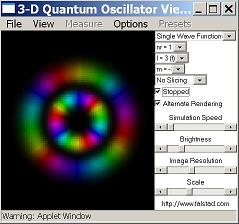
    Quantum Oscillator
    from Nov. 25, 2003
    (St. Catherine's Day)


    Explaining what these Catherine wheels symbolize seems an appropriate task for Oxford philosophers.  From the St. Catherine's College site: "The College's motto - Nova et Vetera (the new and the old) - sums up its unique quality among Oxford colleges."


    See also today's previous entry, prompted by a recent MIT Press book on philosophy and quantum theory.

  • Affirmation of Place and Time:
    East Coker and Grand Rapids


    This morning's meditation:


    "Let us talk together with the courage, humor, and ardor of Socrates.


    In that long conversation, we may find ourselves considering something Plato's follower Plotinus said long ago about 'a principle which transcends being,' in whose domain one can 'assert identity without the affirmation of being.'  There, 'everything has taken its stand forever, an identity well pleased, we might say, to be as it is.... Its entire content is simultaneously present in that identity: this is pure being in eternal actuality; nowhere is there any future, for every then is a now; nor is there any past, for nothing there has ever ceased to be.'  Individuality and existence in space and time may be masks that our sensibilities impose on the far different face of quantum reality."


    -- Peter Pesic, Seeing Double: Shared Identities in Physics, Philosophy, and Literature, MIT Press paperback, 2003, p. 145


    A search for more on Plotinus led to sites on the Trinity, which in turn led to the excellent archives at Calvin College in Grand Rapids.


    A search for the theological underpinnings of Calvin College led to the Christian Reformed church:


    "Our emblem is
    the cross in a triangle."


    The triangle, as a symbol of "the delta factor," also plays an important role in the semiotic theory of Walker Percy.  A search for current material on Percy led back to one of my favorite websites, that of Percy expert Karey Perkins, and thus to the following paper:


    The "East Coker" Dance
    in T. S. Eliot's Four Quartets:
    An Affirmation of Place and Time

    by Karey Perkins


    For a rather different, but excellent, literary affirmation of place and time -- in Grand Rapids, rather than East Coker -- see, for instance, Michigan Roll, a novel by Tom Kakonis.


    We may, for the purposes of this trinitarian meditation, regard Percy and Kakonis as speaking for the Son and Karey Perkins as a spokesperson for the Holy Spirit.  As often in my meditations, I choose to regard the poet Wallace Stevens as speaking perceptively about (if not for, or as) the Father.  A search for related material leads to a 1948 comment by Thomas McGreevy, who


    "... wrote of Stevens' 'Credences of Summer' (Collected Poems 376),


    On every page I find things that content me, as 'The trumpet of the morning blows in the clouds and through / The sky.'


    A devout Roman Catholic, he added, 'And I think my delight in it is of the Holy Spirit.' (26 May 1948)."


    An ensuing search for material on "Credences of Summer" led back, surprisingly, to an essay -- not very scholarly, but interesting -- on Stevens, Plotinus, and neoplatonism.


    Thus the circle closed.


    As previous entries have indicated, I have little respect for Christianity as a religion, since Christians are, in my experience, for the most part, damned liars.  The Trinity as philosophical poetry, is, however, another matter.  I respect Pesic's speculations on identity, but wish he had a firmer grasp of his subject's roots in trinitarian thought.  For Stevens, Percy, and Perkins, I have more than respect.

  • Retiring Faculty


    The following is related to
    today's previous four log24 entries.


    From my paper journal, a Xeroxed note, composed entirely of cut copies
    of various documents,
    from July 11, 1990....


    Harvard Alumni Gazette June 1990


    Retiring Faculty Continue their Love of Learning, Creativity

    Thought for today: "He who tells the truth must have one foot in the stirrup." -- Armenian Proverb


    Preserve me from the enemy
         who has something to gain: and
         from the friend who has something to lose.
    Remembering the words of
         Nehemiah the Prophet:
    "The trowel in hand, and the gun
         rather loose in the holster."


    -- T. S. Eliot, Choruses from the Rock -- 1934


    Pattern in Islamic Art is the most thorough study yet published of the structure of the art.


    Oleg Grabar, Aga Khan Professor of Islamic Art, will join the Institute for Advanced Study at Princeton, where he will devote himself to pure research.  He has three books planned -- which he estimates will take him about four years to finish -- including books on the theory of ornament, and studies of early medieval Jerusalem and Islamic Sicily.  "I'm also planning to brush up on my Persian, which I had kind of forgotten," he said.


    Clint Eastwood is the nameless stranger who mysteriously appears in the Warner Brothers film 'Pale Rider.'


    Closing the cylinder, he holstered the gun, pivoted, and strode across the now silent street toward his horse.
       An ashen-faced Lahood stared out the second-story window, following the tall man's movements.  In his right hand he held a long-barreled blue-black derringer.  He raised the muzzle purposefully.
       The Preacher put a foot in the stirrup and hesitated.  Turning, he lifted his eyes to a particular window.  The curtains behind it moved slightly.  The report of the single shot was muffled by distance and glass.  From his position the Preacher could not hear the thump of the body as it struck the thick Persian rug.  He did not have to hear it.
       Lahood had begun this day's work, and Lahood had finished it.


    Sources: Harvard Alumni Gazette, local newspaper, a volume of the poems of T. S. Eliot, David Wade's Pattern in Islamic Art, and a paperback novelization of Pale Rider

  • Theory of Design


    For an introduction, see


    Pattern in Islamic Art, by David Wade.


    For a deeper look that is related to the previous three log24 entries, see Goppold's


    Prolegomena to an Art Theory.

  • Lila


    Robert M. Pirsig, Lila, 1991 Bantam hardcover, p. 111:


    "... Quality 'is' morality. Make no mistake about it. They're 'identical.'  And if Quality is the primary reality of the world then that means morality is also the primary reality of the world."


    -- Quoted at
       The Alexander-Pirsig Connection.


    "This creative activity of the Divine is called lila, the play of God, and the world is seen as the stage of the divine play."


    -- Fritjof Capra, The Tao of Physics, Third Edition, Updated, 1991, Shambhala paperback, pp. 87-88, quoted here


    "All the world's a stage."


    -- William Shakespeare

  • Speaking Globally


    On Janet Jackson at the Super Bowl:


    "I don’t expect much but I am hoping that the whole episode rekindles a discussion in the country about the incredible double standard there is in the popular culture. Adults complain about the prevalence of teen sex, teen pregnancy, drug abuse, and lack of respect for appropriate authority but then place those very behaviors in front of children in the form of talented, attractive and highly paid role models. This is not a sensible approach. Speaking globally, this culture is asking for its own demise."


    -- Warren Throckmorton, 2/3/04

  • The Quality with No Name


    And what is good, Phædrus,
    and what is not good...
    Need we ask anyone to tell us these things?


    -- Epigraph to
       Zen and the Art of Motorcyle Maintenance


    Brad Appleton discusses a phrase of Christopher Alexander:


    "The 'Quality Without A Name' (abbreviated as the acronym QWAN) is the quality that imparts incommunicable beauty and immeasurable value to a structure....


    Alexander proposes the existence of an objective quality of aesthetic beauty that is universally recognizable. He claims there are certain timeless attributes and properties which are considered beautiful and aesthetically pleasing to all people in all cultures (not just 'in the eye of the beholder'). It is these fundamental properties which combine to generate the QWAN...."


    See, too, The Alexander-Pirsig Connection.

  • From Re Joyce,
    by Anthony Burgess:


  • New web page:


    Block Designs.