Month: January 2004

  • Games


    On this date —


    Alfred Tarski was born
    in 1902 in Warsaw, and


    Kurt Friedrich Gödel died
    in 1978 in Princeton.


    From last year's entry on this date:


    What is Truth?


    "What is called 'losing' in chess
    may constitute winning
    in another game."


    -- Ludwig Wittgenstein,
    Remarks on the
    Foundations of Mathematics
    (revised edition, MIT Press, 1978)

  • At Last, Some Veritas

    From the Harvard Crimson, 1/12/04:

    College Faces Mental Health Crisis

    "An overwhelming majority of Harvard undergraduates struggle with mental health problems, a recent Crimson poll found."

    Related material:

    "The people who intermediate between lunatics and the world used to be called alienists; the go-betweens for mathematicians are called teachers. Many a student may rightly have wondered if the terms shouldn't be reversed."

    -- Book review in the current Harvard Magazine; among the authors reviewed is Harvard mathematician and administrator Benedict H. Gross.

    "Dean of the College Benedict H. Gross ’71 has said improving mental
    health services is one of his top priorities in his first year on the
    job."

    -- Harvard Crimson 1/12/04

    "He takes us to the central activity of mathematics—which is imagining...."

    -- Harvard Magazine on Harvard mathematician and author Barry Mazur.

    For related material on Mazur, see

    A Mathematical Lie.

    "The teenagers aren't all bad. I love 'em if nobody else does. There
    ain't nothing wrong with young people. Jus' quit lyin' to 'em."

    -- Jackie "Moms" Mabley

  • Deeply Deep


    "Remember your epiphanies on green oval leaves, deeply deep, copies to be sent if you died to all the great libraries of the world, including Alexandria?"


    -- James Joyce, Ulysses, "Proteus"


    James Joyce may or may not have been a saint.  Today is, accordingly, either his feast day or his secular day of remembrance.


    With Joyce in mind, I surfed the Heckler & Coch weblog archives this afternoon and found a link to a page that credits


    "Jørn Barger, an amateur
      James Joyce scholar...."


    with the first use of the term "weblog" in its current sense.


    Seeking more on Barger and Joyce, I found that Barger has gone into seclusion and that his Joyce website is no longer online.


    Google has a cache of his Joyce portal, however, and the portal and its sub-pages are also available at the Internet Archive Wayback Machine:


    http://web.archive.org/web/2003*/
    http://www.robotwisdom.com/jaj/*

    These pages from Barger's labor of love, though neither green nor oval, may serve as this year's Joyce memorial.

  • In Summary


    To sum up the last two entries:


    "I returned and saw under the sun
     that the race is not to the swift,
     nor the battle to the strong,
     nor bread to the wise,
     nor riches to men of understanding,
     nor favor to men of skill;
     but time and chance
     happeneth to them all"


    -- Ecclesiastes 9:11.

  • Two-Dimensional Time

    The following is from the Prime Quotes page at the website of Matthew R. Watkins...


    "I have sometimes thought that the profound mystery which envelops our conceptions relative to prime numbers depends upon the limitations of our faculties in regard to time, which like space may be in essence poly-dimensional and that this and other such sort of truths would become self-evident to a being whose mode of perception is according to superficially as opposed to our own limitation to linearly extended time."


    J.J. Sylvester, from "On certain inequalities relating to prime numbers", Nature 38 (1888) 259-262, and reproduced in Collected Mathematical Papers, Volume 4, page 600 (Chelsea, New York, 1973)

    The link within the quote, supplied
    by Watkins, is to a bibliography on time and causality.  On another page at his site, Watkins says:


    Translated into contemporary English, Sylvester is saying more-or-less this:

    "I have sometimes thought that if we were able to perceive time in some multi-dimensional way, more like a surface than like a line, then perhaps the distribution of prime numbers would be entirely self-evident, and would not seem at all mysterious to us."


    Many thanks to Heckler & Coch (5/19/03) for pointing out the Sylvester quotation.


    For related thoughts on this topic, see Time Fold.

  • The Lottery


    New York
    Jan. 10, 2004


    Midday:  720


    Evening: 510


    Pennsylvania
    Jan. 10, 2004


    Midday:  616


    Evening: 201


    What these numbers mean to me:


    720: See the recent entries


    Music for Dunne's Wake,


    720 in the Book, and


    Report to the Joint Mathematics Meetings.


    616 and 201:


    The dates, 6/16 and 2/01,
    of Bloomsday and St. Bridget's Day.


    510:  A more difficult association...


    Perhaps "Love at the Five and Dime"
    (8/3/03 and 1/4/04).


    Perhaps Fred Astaire's birthday, 5/10.


    More interesting...


    A search for relevant material in my own archives, using the phrase "may 10" cullinane journal, leads to the very interesting weblog Heckler & Coch, which contains the following brief entries (from May 19, 2003):


    "May you live in interesting times
    While widely reported as being an ancient Chinese curse, this phrase is likely to be of recent and western origin.

    Geometry of the I Ching
    The Cullinane sequence of the 64 hexagrams"


    "... there are many associations of ideas which do not correspond to any actual connection of cause and effect in the world of phenomena...."


    -- John Fiske, "The Primeval Ghost-World," quoted in the Heckler & Coch weblog


    "The association is the idea"


    -- Ian Lee on the communion of saints and the association of ideas (in The Third Word War, 1978)

  • String Theory


    Phil Sweetland of the New York Times on Gospel singer St. Jake Hess, who died on Sunday, January 4, 2004 -- also the feast day of saints T. S. Eliot, T.S. Matthews, and Joan Aiken --


    "Mr. Hess was the string that tied together many of Christian music's most famous quartets and ensembles, and he was an idol and later a colleague of [Elvis] Presley....


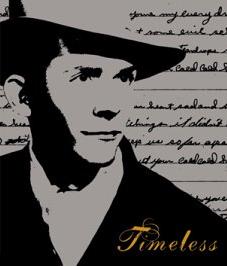
    Mr. Hess sang at his funeral in 1977, as he had at the funeral of Hank Williams in 1953."


    "Go to other people's funerals,
    otherwise, they won't go to yours."


    -- Proverb attributed to St. Yogi Berra


    "... to apprehend
     The point of intersection of the timeless
     With time, is an occupation for the saint.... "


    -- T. S. Eliot, Four Quartets


    "You win again."


    -- Keith Richards,
    tribute to Hank Williams

  • Report to the
    Joint Mathematics Meetings


    "What was the lecture about,
    Cosmo wanted to know.


    'It's about solving equations
    of the fifth degree,
    which are supposed to be insoluble.'"


    -- Chapter 2 of
    The Shadow Guests,
    by Joan Aiken


    For more material on insolubility
    of fifth-degree equations
    and on this winter's
    Joint Mathematics Meetings
    (Phoenix, Jan. 7-10), see
    the January 6 entry
    720 in the Book.


    For more material on Joan Aiken,
    who died on January 4,
    see the previous entry.


    The number 720 is the order of
    the symmetric group of degree 6.


    For material related to
    exceptional outer automorphisms
    of this group and to
    a song about Arizona, see


    Skewed Mirrors.


    Arizona Star:


    "Shinin' like a diamond
     she had tombstones
    in her eyes."


  • HURRY UP PLEASE
    IT'S TIME


    -- T. S. Eliot,
    The Waste Land, II
    "A Game of Chess"


    "Make the white Queen run so fast 
     she hasn't got time to make you wise, 
     'cause it's time, it's time
        in time with your time
                                  and its news
     is captured
                      for the Queen to use."


    --   from "Your Move," or
        "I've Seen All Good People,"
         by Yes (Jon Anderson and
         Chris Squire), played in the
         soundtrack of a "Big Fish"
         movie trailer tonight in the
         obituary of Brian Gibson at
         the New York Times site.


         For related material, see
         The Black Queen and 
         History of a Symbol.


    Jan. 9 obituary of Brian Gibson --


    "In 2002 he was executive producer of the film 'Frida,' about the artist Frida Kahlo...."


    Captured for the Queen


    Joan Aiken


    Photo by Alex Gotfryd,
    circa 1972


    Jan. 9 obituary of Joan Aiken --


    "Joan Aiken was born in Rye, England, a daughter of the American poet Conrad Aiken...."


    Dust jacket of a novel -- 


    "Malcolm Lowry's Under the Volcano must be, for anyone who loves the English language, a sheer joy."


    -- Conrad Aiken


    "He was never inclined to small talk."


    -- Jan. 9 obituary of Steven Edward Dorfman, writer of questions (i.e., answers) for the game show "Jeopardy!"


    "What's the Hellfire Club?"


    -- Joan Aiken, beginning of the final chapter of The Shadow Guests


    Note that Dorfman, Gibson, and Aiken
    all died on Sunday, Jan. 4, 2004.
    For some related material, see


    Sunday in the Park with Death.

  • Natasha's Dance


    "... at the still point, there the dance is...."


    "... to apprehend
     The point of intersection of the timeless
     With time, is an occupation for the saint.... "


    -- T. S. Eliot, Four Quartets


    It seems, according to Eliot's criterion, that the late author John Gregory Dunne may be a saint.


    Pursuing further information on the modular group, a topic on which I did a web page Dec. 30, 2003, the date of Dunne's death, I came across a review of Apostol's work on that subject (i.e., the modular group, not Dunne's death, although there is a connection).  The review:


    "A clean, elegant,
    absolutely lovely text..."


    Searching further at Amazon for a newer edition of the Apostol text, I entered the search phrase "Apostol modular functions" and got a list that included the following as number four:


    Natasha's Dance:
    A Cultural History of Russia
    ,


    which, by coincidence, includes all three words of the search.


    For a connection -- purely subjective and coincidental, of course -- with Dunne's death, see The Dark Lady (Jan. 1, 2004), which concerns another Natasha... the actress Natalie Wood, the subject of an essay ("Star!") by Dunne in the current issue of the New York Review of Books.


    The Review's archives offer another essay, on science and religion, that includes the following relevant questions:


    "Have the gates of death
    been opened unto thee?
    Or hast thou seen the doors
    of the shadow of death?"


    From my December 31 entry:


    In memory of
    John Gregory Dunne,
    who died on
    Dec. 30, 2003
    :


    For further details, click
    on the black monolith.