Month: January 2003

  • Dead Poet in
    the
    City of Angels

    Lyricist Eddy Marnay died Friday, Jan. 3, 2003.
    Relevant Log24.net entries:


    Certain themes recur in these entries.  To describe such recurrent themes, in art and in life, those enamoured of metaphors from physics may ponder the phrase
    "implicate order."


    For an illustration of at least part of the
    implicate order,
    click here.


    Another name for the implicate order is, of course, the Tao:


    "The Chinese also speak of a great thing (the greatest thing) called the Tao. It is the reality beyond all predicates, the abyss that was before the Creator Himself. It is Nature, it is the Way, the Road. It is the Way in which the universe goes on, the Way in which things everlastingly emerge, stilly and tranquilly, into space and time."


    — C. S. Lewis, The Abolition of Man

  • Doctorow's Epiphany

    E. L. Doctorow is 72 today.


    In the Garden of Adding...


    The above is a phrase from The Midrash Jazz Quartet in Doctorow's novel City of God.


    Tonight's site music is "Black Diamond."


    William T. Noon, S.J., Chapter 4 of Joyce and Aquinas, Yale University Press, 1957:


      A related epiphanic question, second only in interest to the question of the nature of epiphany, is how Joyce came by the term. The religious implications would have been obvious to Joyce: no Irish Catholic child could fail to hear of and to understand the name of the liturgical feast celebrated on January 6. But why does Joyce appropriate the term for his literary theory? Oliver St. John Gogarty (the prototype of the Buck Mulligan of Ulysses)... has this to say: "Probably Father Darlington had taught him, as an aside in his Latin class -- for Joyce knew no Greek -- that 'Epiphany' meant 'a shining forth.'"


    From Stanley Kubrick's The Shining:


    Danny Torrance: Is there something bad here?
    Dick Hallorann: Well, you know, Doc, when something happens, you can leave a trace of itself behind. Say like, if someone burns toast. Well, maybe things that happen leave other kinds of traces behind. Not things that anyone can notice, but things that people who "shine" can see. Just like they can see things that haven't happened yet. Well, sometimes they can see things that happened a long time ago. I think a lot of things happened right here in this particular hotel over the years. And not all of 'em was good.


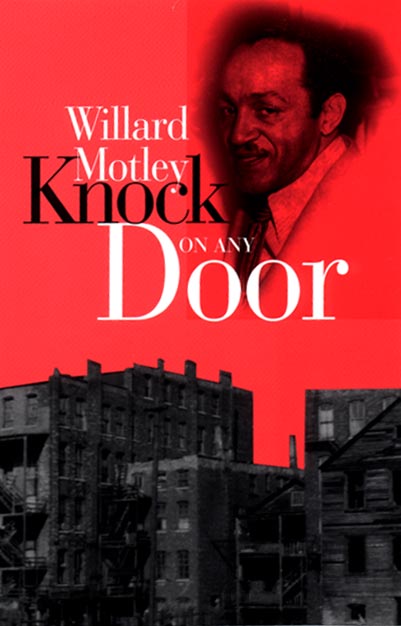
    From a website on author Willard Motley:


    "Willard Motley’s last published novel is entitled, Let Noon Be Fair, and was actually published post-humously in 1966. The story line takes place in Motley’s adopted country of Mexico, in the fictional fishing village of Las Casas, which was based on Puerta [sic] Vallarta."


    See also "Shining Forth" and yesterday's entry "Culinary Theology."


  • Culinary Theology


    A comment on "Whirligig," the previous entry:


    When I hear 'red mill,'
    I think Red Mill.


    Red Mill
    Burgers

    Posted 1/5/2003 at 5:10 am
    by
    HomerTheBrave.


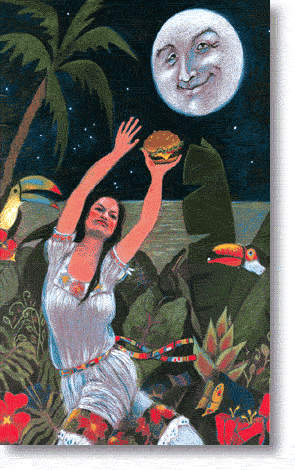
    From my favorite theologian, Jimmy Buffett:


    "Well good God Almighty,
    which way do I steer for my


    Chorus:
    Cheeseburger in paradise (paradise)
    Makin' the best of every virtue and vice (paradise)
    Worth every damn bit of sacrifice (paradise)
    To get a cheeseburger in paradise
    To be a cheeseburger in paradise
    I'm just a cheeseburger in paradise!"


    For some, paradise — or at least the gateway to paradise — is at Puerto Vallarta, Mexico.


    From a one-act version (p. xvi) of
    "The Night of the Iguana":


    "MISS JELKES: Is this the menu? (She has picked up a paper on the table.)


    SHANNON: Yes, it's the finest piece of rhetoric since Lincoln's Gettysburg Address."


    "Cheeseburger In Paradise, Puerto Vallarta, opened for business on November 7, 1999." — The same date, mentioned in last night's "Whirligig" entry, that Fox Studios Australia opened in Sydney with a song by Kylie Minogue. 


  • Whirligig


    Thus the whirligig of time brings in his revenges.
    Twelfth Night. Act v. Sc. 1.


    Twelfth night is the night of January 5-6.


    Tonight is twelfth night in Australia; 4 AM Jan. 5
    in New York City is 8 PM Jan. 5 in Sydney.


    An October 6 entry:


    Twenty-first Century Fox


    On Sunday, October 6, 1889, the Moulin Rouge music hall opened in Paris, an event that to some extent foreshadowed the opening of Fox Studios Australia in Sydney on November 7, 1999.  The Fox ceremonies included, notably, Kylie Minogue singing "Diamonds are a Girl's Best Friend." 


    Red Windmill


    Kylie Minogue


    For the mathematical properties of the red windmill (moulin rouge) figure at left, see Diamond Theory.


    An October 5 entry:


    The Message from Vega


    "Mercilessly tasteful"
     -- Andrew Mueller,
    review of Suzanne Vega's
    "Songs in Red and Gray"


    In accordance with the twelfth-night
    "whirligig of time" theme,
    here are two enigmatic quilt blocks:


    Devil's Claws, or
    Hourglass Var. 3


    Yankee Puzzle, or
    Hourglass Var. 5


    One can approach these symbols in either a literary or a mathematical fashion. For a purely mathematical discussion of the differences in the two symbols' structure, see Diamond Theory. Those who prefer literary discussions may make up their own stories.


    "Plato is wary of all forms of rapture other than reason's. He is most deeply leery of, because himself so susceptible to, the literary imagination. He speaks of it as a kind of holy madness or intoxication and goes on to link it to Eros, another derangement that joins us, but very dangerously, with the gods."


    Rebecca Goldstein in The New York Times,
        December 16, 2002 


    "It's all in Plato, all in Plato; bless me,
    what do they teach them at these schools?"


    — C. S. Lewis in the Narnia Chronicles 


  • ART WARS:

    The Reader
    Over Your Shoulder

    Recommended:

    The Reader Over Your Shoulder: A Handbook for Writers of English Prose
    by Robert Graves and Alan Hodge, London, Jonathan Cape, 1943.

    See also last night's entry on "Red Dragon" and
    this news story on a Chinese cannibal-artist
    from today's Toronto Globe and Mail.

  • Opening of the Graves

    Revelation 20:12 
    I saw the dead,
    the great and the small,
    standing before the throne,
    and they opened books.

    The Dead —

    The Great: 

    On January 4, 1965,
    T. S. Eliot
    died.

    The Small:

    On January 4, 1991,
    T. S. Matthews,
    author of
    Great Tom:
    Notes Towards the Definition
    of T. S. Eliot
    ,
    died.

    From the website of the Redwood Library and Athenæum, Newport, Rhode Island:

    The Library of a 20th-Century
    Man of Letters

    Redwood is the delighted recipient of part of the personal library of Thomas Stanley Matthews ([Jan. 16] 1901- [Jan. 4]
    1991), a shareholder from 1947 until his death and a generous
    benefactor. Matthews, who summered in Middletown for over 50 years,
    began his journalism career with The New Republic, where he served as
    assistant editor between 1925 and 1927 and as an associate editor
    between 1927 and 1929. He was then hired as books editor at Time, where
    over the next 20 years he held the positions of assistant managing
    editor, executive editor, and managing editor. In 1949 he succeeded the
    magazine's founder, Henry Luce, as editor. Upon retiring in 1953, he
    moved to England.

    Matthews edited The Selected Letters of Charles
    Lamb (1956), for which he wrote the introduction. He published two
    volumes of memoirs, Name and Address: An Autobiography (1960) and Jacks
    or Better (1977; published in England as Under the Influence); two
    volumes of poetry; The Sugar Pill: An Essay on Newspapers (1957); O My
    America! Notes on a Trip (1962); Great Tom: Notes Towards the
    Definition of T. S. Eliot (1974); a volume of character sketches,
    Angels Unawares: Twentieth-Century Portraits (1985); and eight volumes
    of aphorisms, witticisms, and verse.

    Shortly before his death, Matthews expressed the
    desire that all his books be left to Redwood Library.... [including]
    books by Seamus Heaney, Louis MacNeice, Ezra Pound, Laura Riding,
    Edward Arlington Robinson, W. H. Auden, e e cummings, and Robert
    Graves.

    Of particular interest are the 16 volumes by Graves, most of them autographed by the author....


    "Like the beat, beat, beat
    of the tom-tom...."

    — Cole Porter, 1932 

    colporteur

    n. itinerant seller or giver of books,
    especially religious literature.

    Now you has jazz.

    — Cole Porter, lyric for "High Society,"
    set in Newport, Rhode Island, 1956

  • A Darker Side of C. S. Lewis

    Known for his fairy-story series "The Chronicles of Narnia," C. S. Lewis had a more serious — some might say darker — side.

    His portrayals of science and scientists in That Hideous Strength  give an accurate picture of moral degeneracy in that subculture.  The hero of Lewis's "space trilogy," of which That Hideous Strength
    is the conclusion, is a philologist  — a student of
    language.  In keeping with Lewis's interest in philology and in
    fairy stories, and with the fact that today is Jacob Grimm's
    birthday, here are some philological observations related to the word
    "middle" — as in the "middle earth" of Lewis's friend
    Tolkien, or in "middle kingdom," the Chinese name for China.

    From a bulletin board site, sciforums.com, that bills itself as an "intelligent science community":

    Forum: Art & Culture

    Thread: Red Dragon

    User: aseedrain

    I've just watched "Red Dragon". Not bad actually but
    there was a triviality in the film that somewhat spoilt my appreciation
    of it. In the film, the serial killer (played by Ralph Fiennes) leaves
    a mark behind - a Chinese character. The character is explained as a
    character that appear [sic] on mahjung pieces that
    carries the meaning 'red dragon'.

    Now I know for a fact
    that the Chinese character that appears in the film means 'centre' or
    'middle'. It is one of the two characters that make up the name "China"
    or its literal translation "Middle Kingdom". I'm no expert on the
    mahjung game but I do know that even in the game, the piece that carry
    [sic] this character is also referred as "chung" meaning 'middle'.
    I have never come across any instances where this particular character
    referred to dragons.

    Therefore, in the absence of any other explanation, I assume the film made a mistake with this little detail....

    From the Four Winds Mah Jong site:

    The developers of the classical Mah Jong were
    educated and knew well the classical Chinese philosophical and
    mythological tradition, particularly the Book of Changes and the Book of Surprises.
    The elements of the game symbolize interaction of the three extremes of
    the universe: Heaven, Earth and Man, expressed in many ways, not only
    by images graved in the tiles, but also in a way the tiles form
    numerically significant groups and combinations.

    Thus 144 is said to be the number of the plan of
    Earth, and the square formed by the tiles can be seen as a symbolic
    representation of the universe. Heaven is manifested in the Four
    Seasons, Earth in the Four regions (East, South, West and North), and
    Man in the Four Flowers (symbolizing motion or life). The Dragons ('San
    Yuan' or 'San Chi' in Chinese, meaning "Extremes") symbolize Heaven
    (White Dragon, 'Po', meaning "white" or" blank"), Earth (Green Dragon,
    'Fa', meaning "prosperous") and Man (Red Dragon, 'Chung', meaning
    "center", i.e. "between Heaven and Earth"). 

    From another mah jong site:

    Red Dragon
    Chinese Character: "Chung"

    The true name of this tile is represented by the Chinese character "Chung" which means centre or middle.
    The "Chung" character represents interpretation an arrow striking the
    centre of a target. The meaning of this tile is therefore - success or achievement.

    This tile is the counterpart of the "The Green
    Dragon" tile which shows the arrow about to leave the bow. It is
    commonly called "The Red Dragon" in western Mah Jong sets because the
    "Chung" character is generally drawn in red ink.

    From a page on a pilot of the USAF China National Aviation Corp. (CNAC) Air Transport Command Group:

    The significance of the chung on the plane is explained here.  Suggested
    as an insignia by General Claire Chennault in 1942, it may be imagined
    to have signified — as on the mah jong tile — success or achievement in
    this area as well.

    Let us hope that philologists and fairy-tale students
    like Grimm and Lewis — rather than followers of the religion of
    scientism — continue to inspire and guide those who must fight for our
    values.

  • The Shanghai Gesture:
    An Exercise in Synchronicity

    "A corpse will be transported by express!"

    Under the Volcano, by Malcolm Lowry (1947)


    Dietrich


    Minogue

    For Dietrich, see the reference below;
    For Minogue, see my entry
    "That Old Devil Moon"
    of January 1st, 2003.

    From the Turner Classic Movies website:

    PLAYING ON TCM:
    Jan 03, 2003, 08:00 PM

    Shanghai Express  (1932)
    CAST: Marlene Dietrich, Clive Brook, Anna May Wong. DIRECTOR: Josef von Sternberg.

    A beautiful temptress re-kindles an old romance while trying to
    escape her past during a tension-packed train journey. [Set in
    1931] BW-82m

    From The New Yorker magazine,
    received in the mail this afternoon:

    Shanghai Moon

    "...a new play... set in Shanghai in 1931.... Previews begin Jan. 3."

    Given the above, a believer in synchronicity
    under the volcano 
    will naturally search for a suitable corpse...
    and voilà:

    The Toronto Star

    Friday, Jan. 3, 2003. 05:50 PM

    Syndicated astrologist
    Sydney Omarr, 76, dies

    LOS ANGELES (AP) — Sydney Omarr, the astrologer to
    the stars who came to write horoscopes that appear in more than 200
    North American newspapers, has died. He was 76.

    Omarr, who was blinded and paralysed from the neck
    down by multiple sclerosis, died Thursday [Jan. 2, 2003] in hospital in
    Santa Monica of complications from a heart attack, the Los Angeles
    Times reported. His ex-wife, assistants and several close friends were
    by his side.

    Born Sidney Kimmelman in Philadelphia, Omarr decided to change his name at age 15 after watching a movie called The Shanghai Gesture,
    starring Victor Mature as a character named Omar. He changed the
    spelling of his first name and adopted Omar as his last name, but added
    a second "r," in accordance with certain numerological formulas.

    "It has a ghastly familiarity,
    like a half-forgotten dream."
     — Poppy (Gene Tierney) in
    "The Shanghai Gesture."

    "It's a gesture, dear, not a recipe."
     — Peggy (Vanessa Redgrave) in
    "Prick Up Your Ears"


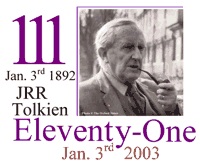
  • Tolkien is Eleventy-One Today!

    In observance of this milestone, some links:


  • Faces of the Twentieth Century:
    The Harvest Continues


    "I walk, I lift up, I lift up heart, eyes,
    Down all that glory in the heavens to glean our Saviour;
    And, éyes, héart, what looks, what lips yet gave you a
    Rapturous love's greeting of realer, of rounder replies?"


    — Gerard Manley Hopkins, "Hurrahing in Harvest"


    Mary Brian


    Joe Foss


    "Cowboy, take me away.
    Fly this girl as high as you can
    into the wild blue."


    The Dixie Chicks


    See
    "Culture Clash at Midnight in the Garden of Good and Evil"
    in my notes of December 11, 2002.